

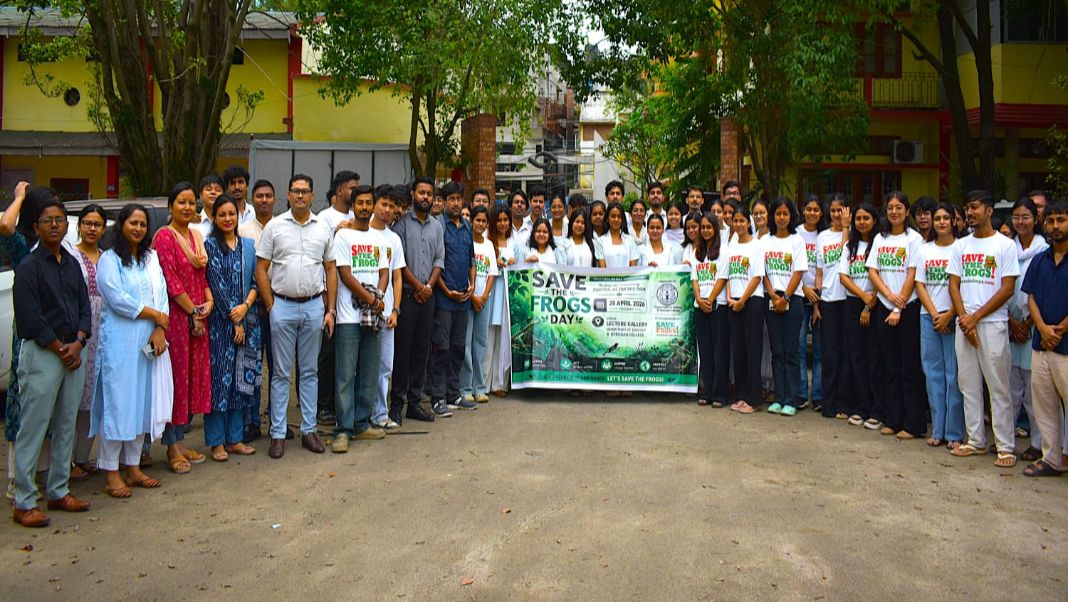

Guwahati, April 28: With amphibians increasingly under threat, a conservation-focused event at B. Borooah College on Tuesday highlighted the ecological importance of frogs and the urgent need to protect their habitats across Northeast India.
Organised by the Department of Zoology in collaboration with SAVE THE FROGS!, the programme marked the annual Save The Frogs Day and brought together students, researchers and conservationists.
Addressing the gathering, noted herpetologist Jayaditya Purkayastha underlined the region’s global ecological significance, noting that Northeast India—part of the Eastern Himalaya and Indo-Burma biodiversity hotspots—hosts remarkable amphibian diversity.
“Of over 9,000 amphibian species recorded worldwide, around 167 are found in Northeast India, with nearly 65 species documented in Assam alone,” he said, warning that many remain poorly studied and vulnerable.
Purkayastha explained that amphibians—including frogs, toads and caecilians—serve as critical bioindicators, reflecting the health of ecosystems.
Their role extends from controlling insect populations to sustaining food chains and aiding nutrient cycling.
However, he cautioned that amphibian populations are declining due to habitat loss, pollution, climate change and emerging diseases—trends that could have cascading ecological consequences.
The session also shed light on conservation initiatives led by SAVE THE FROGS!, including research, education and community outreach, while encouraging students to explore careers in wildlife science.
Event coordinator Bijay Basfore said such engagements are vital in a region where traditional practices, including frog consumption, still persist. “These interactions help build scientific curiosity and conservation ethics among young people,” he noted.
The programme concluded with a call for greater awareness, research and community participation to safeguard the region’s amphibian diversity.