

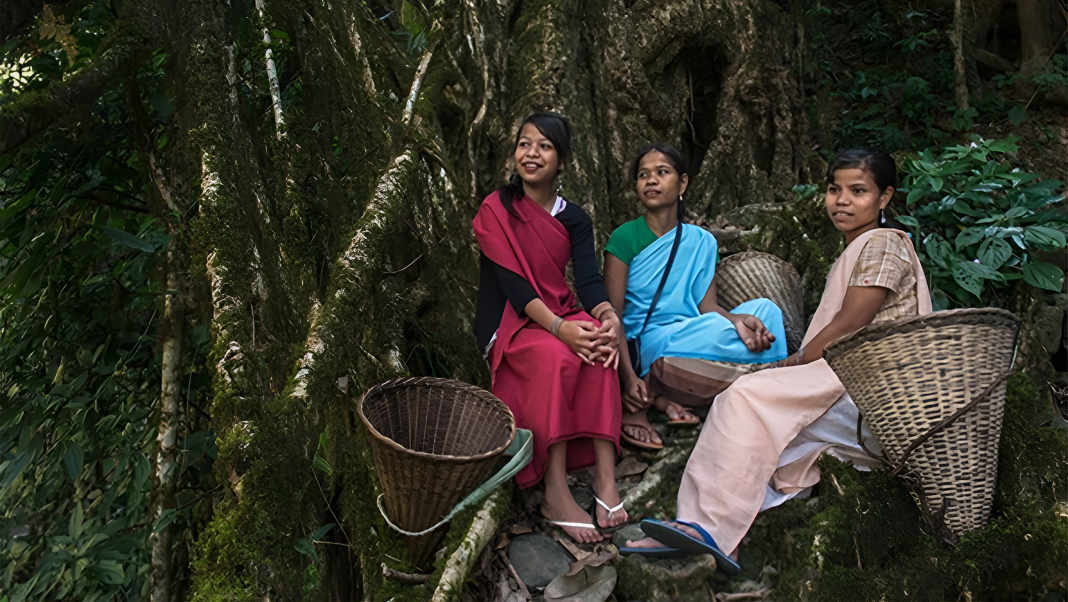

Shillong, Aug 30: What story does a face tell? For researchers in Northeast India, the answer goes far beyond appearance. A pioneering study has, for the first time, mapped the nasofacial features of Meghalaya’s three major communities—Khasi, Garo, and Jaintia—offering insights that could reshape forensic science, reconstructive surgery, and even the design of protective masks.

The cross-sectional study, conducted between 2022 and 2023 and published in the Journal of the Anatomical Society of India (April–June 2025 issue), involved 104 adults drawn from the three communities. The researchers measured face length, face width, nasal length, nasal width, and other parameters that help define craniofacial proportions. Their aim was simple but significant: to fill a research gap in a region where no anthropometric studies of adults had been carried out before.
Faces as Identity Markers
Anthropometry—the scientific measurement of the human body—has long been used in fields ranging from archaeology to modern crime investigation. But in today’s world, its role is expanding. From ensuring respirators fit properly to guiding delicate reconstructive surgeries, population-specific measurements are becoming essential.
“In Northeast India, and particularly Meghalaya, facial features are distinct compared to both neighboring Indian states and East Asia. Without population-specific data, forensic analysis or surgical interventions risk erasing those distinctions,” the authors note in their report.
The Shape of Meghalaya’s Faces
The findings show that most participants had long and narrow faces, technically called hyperleptoprosopic. This face type was most common among Garo and Jaintia individuals, while Khasi participants showed a greater proportion of leptoprosopic (moderately narrow) faces. Mesoprosopic (medium-width) faces were also present but less frequent.
Nasal structures showed another fascinating pattern. The overall mean nasal index—a ratio of nose width to nose height—was 72.2, placing Meghalaya’s population in the mesorrhine category, which denotes medium-broad noses. Yet distinctions emerged: Khasi and Garo individuals were more commonly mesorrhine, while the Jaintia group leaned toward leptorrhine, or narrower noses.

Why It Matters
These differences are not cosmetic trivia. In forensic investigations, where identifying unknown individuals often depends on reconstructing facial features from skeletal remains, accurate community-specific data can make the difference between recognition and anonymity. In surgery, particularly in procedures aimed at repairing facial trauma or congenital abnormalities, using global averages may lead to results that do not reflect an individual’s ethnic identity.
Even industries like defense and healthcare stand to benefit. Respirator masks, for instance, are often designed on Western facial averages, leading to poor fit and reduced safety for Asian populations. By providing accurate baselines for Meghalaya’s ethnic groups, the study offers a foundation for designing better equipment.
The researchers argue for more extensive studies covering larger sample sizes and additional communities across Northeast India. But as a starting point, their work marks a crucial step in linking science, identity, and healthcare.
As the authors conclude, “Nasofacial anthropometry is not only about measurements. It is about ensuring that forensic, medical, and design practices respect and preserve ethnic individuality.”
Also Read: 15 years on, Meghalaya students demand Horticulture College at Williamnagar
Also Watch
Find latest news from every corner of Northeast India at hubnetwork.in, your online source for breaking news, video coverage.
Also, Follow us on-
Twitter-twitter.com/nemediahub
Youtube channel- www.youtube.com/@NortheastMediaHub2020
Instagram- www.instagram.com/ne_media_hub
Download our app from playstore – Northeast Media Hub