


Guwahati, June 4: Art, geometry and culture came together in an image from Assam that has now found a place among the most striking photographs of 2026 featured by BBC Culture.
Taken from high above the Sarusajai Stadium in Guwahati, the photograph captures thousands of Bagurumba dancers performing in perfect synchrony. What appeared as a folk dance to spectators on the ground transformed, from the sky, into an expansive tableau of colour, rhythm and movement unfolding across the stadium floor.
The image, selected by BBC Culture in its annual showcase of remarkable photographs from around the world, turned an indigenous Bodo folk tradition into a visual statement that resonated far beyond Assam.
“The dancers blend into a giant geometric design, turning motion into art,” the BBC wrote while describing the photograph.
For the Bodo community, however, Bagurumba has never been merely about visual spectacle.
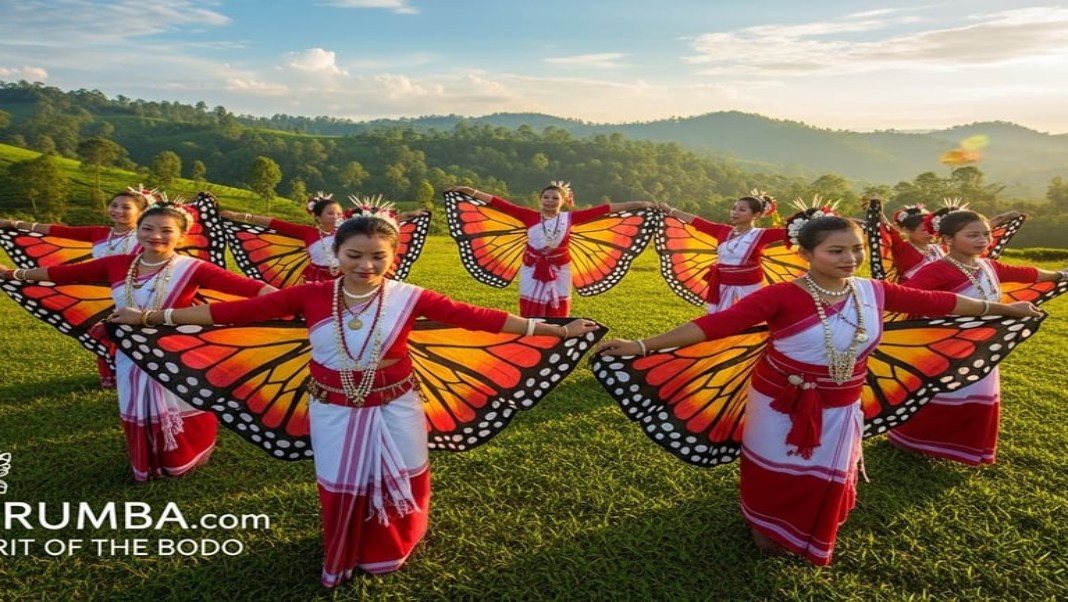
Often referred to as the Butterfly Dance, Bagurumba is one of the most recognisable expressions of Bodo culture. Performed largely by women dressed in vibrant dokhona, jwmgra and aronai, the dance draws its inspiration from nature. Its graceful movements mirror butterflies in flight, birds crossing the sky, leaves swaying in the wind, blooming flowers and the flowing rhythm of rivers.
Unlike many folk traditions rooted in warfare, mythology or royal history, Bagurumba celebrates harmony and coexistence. It reflects a worldview in which humans live in balance with forests, rivers and wildlife. Passed down through generations, it remains a central part of Bodo cultural life and is most prominently performed during Bwisagu, the Bodo New Year festival.
The photograph featured by the BBC was captured during Bagurumba Dwhou 2026, a mass cultural showcase that brought together more than 10,000 performers from across Assam. The stadium was transformed into a sea of colour and movement as dancers formed carefully choreographed patterns that were breathtaking when viewed from above.
On the ground, the performance unfolded to the rhythmic beat of the kham drum and the haunting notes of the sifung flute. From the air, those individual movements merged into a vast visual composition that appeared almost architectural in scale.
Perhaps that is what makes the image so memorable.
It captures not only a dance, but the living essence of a tradition. A cultural expression born in the villages, forests and river valleys of Bodoland suddenly found itself speaking a universal visual language.
For a brief moment, Bagurumba travelled far beyond its homeland.
The world saw a remarkable photograph. Assam saw one of its oldest traditions take flight.