

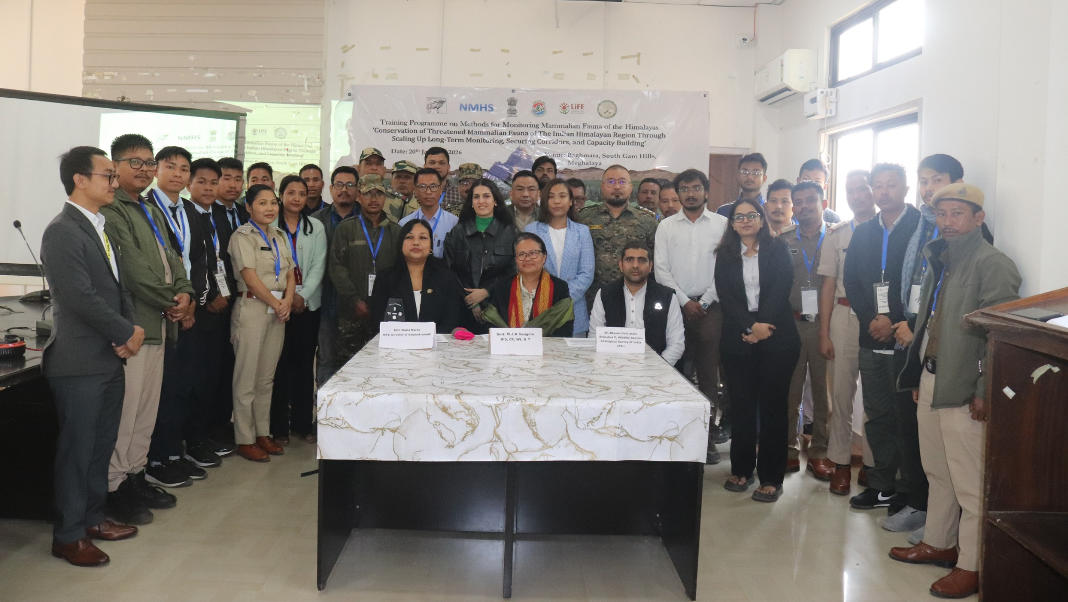

Shillong, Jan 20: At a time when habitat loss, climate change and rising human–wildlife conflict are placing increasing pressure on India’s wildlife, a one-day specialised training programme on monitoring threatened mammalian species was held in Baghmara, South Garo Hills, bringing together forest officials, scientists, law enforcement agencies and local communities.
The training, titled “Monitoring of Threatened Mammalian Fauna of the Indian Himalayan Region (IHR)”, was organised by the Zoological Survey of India (ZSI), Kolkata, today in collaboration with the Meghalaya Forest Department, and hosted at the MFC Hall, DC Office, Baghmara.
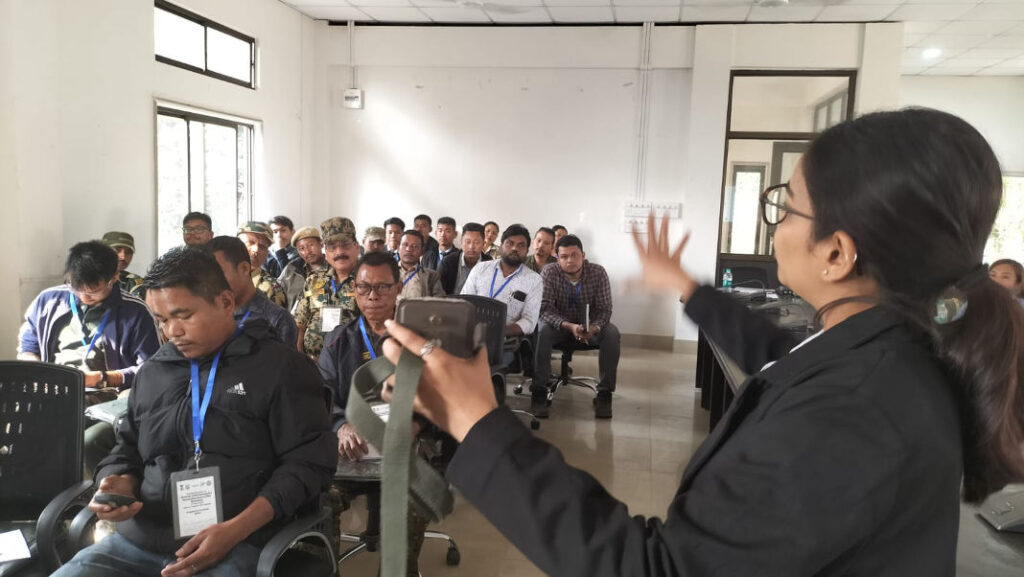
The programme aimed to strengthen on-ground conservation capacity by equipping frontline staff, students and community stakeholders with scientific tools and practical skills for monitoring threatened mammals across the Himalayan and adjoining landscapes.
One of the key highlights of the programme was the presentation of preliminary field findings from South Garo Hills, which revealed high mammalian species richness in Balpakram National Park, followed by community forest reserves. Researchers reported that carnivores accounted for nearly 60 per cent of total camera-trap captures, indicating a healthy prey base and relatively intact ecosystems.
The findings underscore the conservation importance of both protected areas and community-managed forests in Meghalaya, particularly in the South Garo Hills landscape.
The inaugural session was attended by M.J.A. Sangma, Chief Conservator of Forests (Wildlife & Territorial), as Chief Guest, and Nazia Marak, Director, Balpakram National Park, as the Guest of Honour.
Addressing participants, Sangma stressed the need for scientific monitoring and evidence-based decision-making in wildlife management, highlighting the crucial role played by frontline forest staff and local communities in safeguarding biodiversity. Marak called for integrated and participatory conservation approaches, noting that collaboration between government agencies, research institutions and communities is key to sustaining Meghalaya’s rich wildlife heritage.
Dr Bheem Dutt Joshi, Scientist-C, ZSI Kolkata and Training Coordinator, provided an overview of the NMHS-funded project “Conservation of Threatened Mammalian Fauna of the Indian Himalayan Region”, warning that several mammalian species are experiencing rapid population declines due to habitat fragmentation, climate change and increasing human pressures.
Technical sessions covered modern mammal monitoring techniques, including camera trapping, trail surveys, GPS mapping and vegetation sampling. Dr. Amira Sharief delivered a lecture on the introduction to monitoring tools. Dr. Arundeep Singha also discussed human–wildlife interactions, their underlying causes and mitigation strategies, with a focus on conflict-prone landscapes.
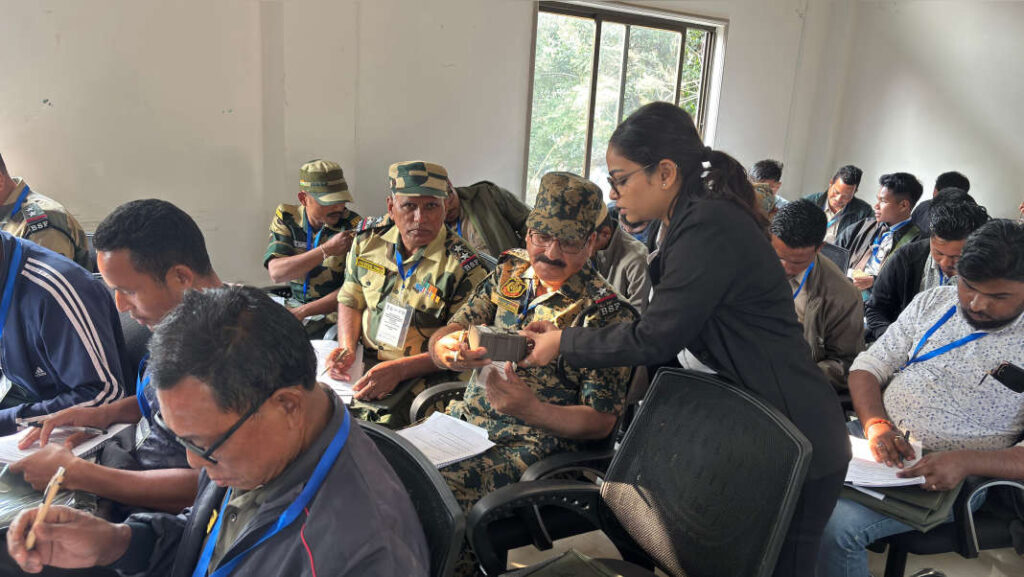
Participants received hands-on field training in the use of camera traps, GPS devices and ecological survey methods, aimed at improving wildlife documentation and long-term biodiversity assessment.
The programme saw participation from the Forest Department, Police, BSF, NGOs, academic institutions, community leaders and over 50 participants, including Environmental Science students from Captain Williamson Memorial Government College, Baghmara.
Speakers repeatedly emphasised the importance of long-term ecological monitoring, genetics-based research and landscape-level studies to understand wildlife movement, population trends and climate resilience.
The programme concluded with a valedictory session, certificate distribution, and a collective pledge to strengthen collaboration between scientists, government agencies and local communities to protect Meghalaya’s threatened mammalian fauna and the wider Indian Himalayan Region.
Also Read: NSCN-KYA cadre surrenders before security forces in Arunachal’s Longding
Also Watch
Find latest news from every corner of Northeast India at hubnetwork.in, your online source for breaking news, video coverage.
Also, Follow us on
Twitter-twitter.com/nemediahub
Youtube channel- www.youtube.com/@NortheastMediaHub2020
Instagram- www.instagram.com/ne_media_hub
Download our app from playstore – Northeast Media Hub