

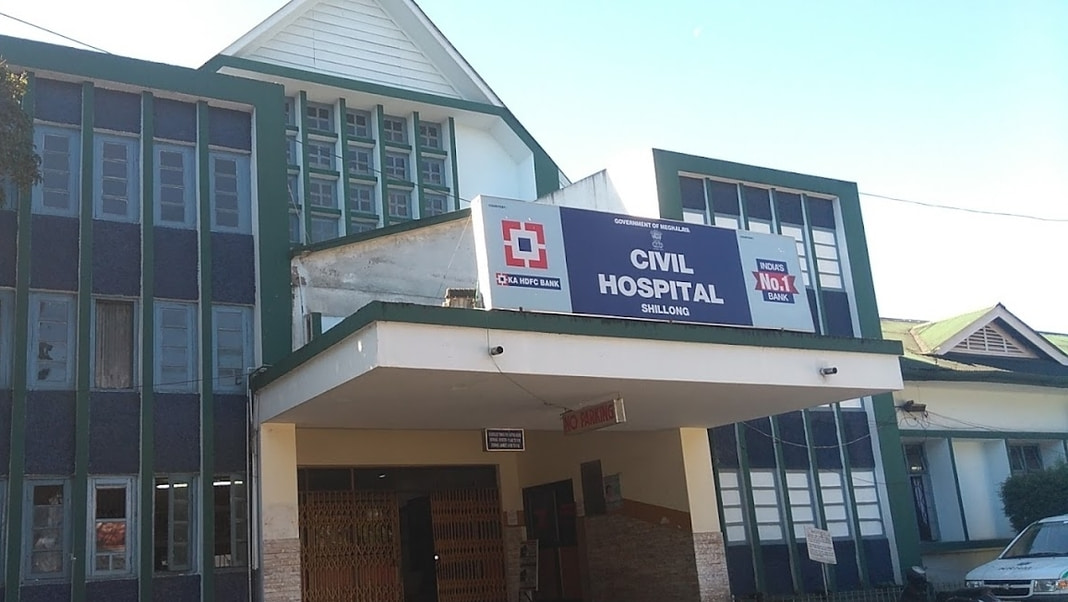

World Bank review says most health targets met or exceeded as hospital performance and maternal outcomes improve across the state
Guwahati, Jan 3: Meghalaya’s public health system has recorded some of its strongest improvements in recent years, with sharp gains in hospital performance, maternal health outcomes and workforce training, according to a recent implementation review by the World Bank. However, the global lender has also raised red flags over construction quality, biomedical waste disposal, and safety standards at several health facilities across the state.
The findings come from a World Bank Implementation Support Mission conducted between December 15 and 17, 2025, under the Meghalaya Health Systems Strengthening Project (MHSSP), a $40 million programme supporting health reforms in the state. The technical note from the mission indicates that overall implementation has improved significantly in the last six months, with Meghalaya meeting or exceeding most of its year-four health targets.
“Four of the five project development indicators have met or exceeded the Year 4 targets. The remaining indicator—relating to quality certification—is on track, with five of the seven district hospitals having achieved certification. Thirteen intermediate indicators show substantial improvement. Of these, twelve indicators—covering management capacity, service delivery, fund utilization in targeted facilities, timely payments to Internal Performance Agreement (IPA) units, participation in and score improvements on clinical vignettes, and health insurance coverage—have met or surpassed the Year 4 targets” the Bank said.
One of the key successes highlighted is the expansion of quality-certified public health facilities. Nineteen facilities, including four district hospitals, have already achieved National Quality Assurance Standards (NQAS) certification, while several more are in the pipeline. By March 2026, around 50 facilities across Meghalaya are expected to be quality-certified.
Performance-linked funding through Internal Performance Agreements (IPAs) has played a major role. Average facility scores improved from 70% to 79% in recent quarters, reflecting better management, service delivery, and fund utilisation. The state has now decided to extend this results-based funding model to all health facilities through an Output-Based Budgeting system, with a full rollout planned from April 2026.
The mission notes tangible improvements in health outcomes, especially for mothers and newborns. Maternal mortality declined from 172 in 2022 to 96 in 2025, while neonatal mortality dropped from 7.2 to 2.7 during the same period. Use of referral services has increased, and access gaps in remote areas have narrowed—an important indicator for a state with difficult terrain and dispersed populations.
More than 3,000 doctors, nurses and instructors have undergone structured training over the past three years, including advanced simulation-based training outside the state. Meghalaya has also trained and placed nearly 200 nurses overseas in the last year, linking health sector reforms with job creation.
While renovation work across 147 health facilities is nearing completion, the World Bank has flagged serious concerns at some sites. Field visits found poor workmanship, damage to completed flooring, and weak safety practices, particularly at the Nongpoh nursing school, where corrective action has been advised.
The Health Department is preparing an externally-aided proposal that focuses on implementing recommendations from the process evaluation of service delivery redesign supported under the project to improve the quality of health services and make facilities more patient-centric; continuing the IPA approach, which is being streamlined for the release of government funding; addressing the longstanding issue of bio-medical waste management through strengthening institutional capacity and through PPPs; scaling up high-impact interventions to create more and better jobs in allied health services both nationally and internationally; and strengthening institutional reforms with an emphasis on digital health. The estimated project size is US$100 million, and the State aims to submit the PPR to the DEA by the end of March 2026.
Another unresolved issue is the non-payment of differential GST to contractors following a national tax hike in 2022, which the Bank notes could affect project execution if not addressed promptly.
Perhaps the most worrying findings relate to biomedical waste management. Around 100 health facilities are using effluent treatment plants and burial pits that do not meet safety norms due to Meghalaya’s high groundwater levels. The Bank warned that continued use of such pits without water quality testing could pose contamination risks, urging the state to phase them out and accelerate plans for common treatment facilities through public-private partnerships.
Also Read: When forests fall silent: habitat loss threatens India’s only periodical cicada
Also Watch
Find latest news from every corner of Northeast India at hubnetwork.in, your online source for breaking news, video coverage.
Also, Follow us on-
Twitter-twitter.com/nemediahub
Youtube channel- www.youtube.com/@NortheastMediaHub2020
Instagram- www.instagram.com/ne_media_hub
Download our app from playstore – Northeast Media Hub