

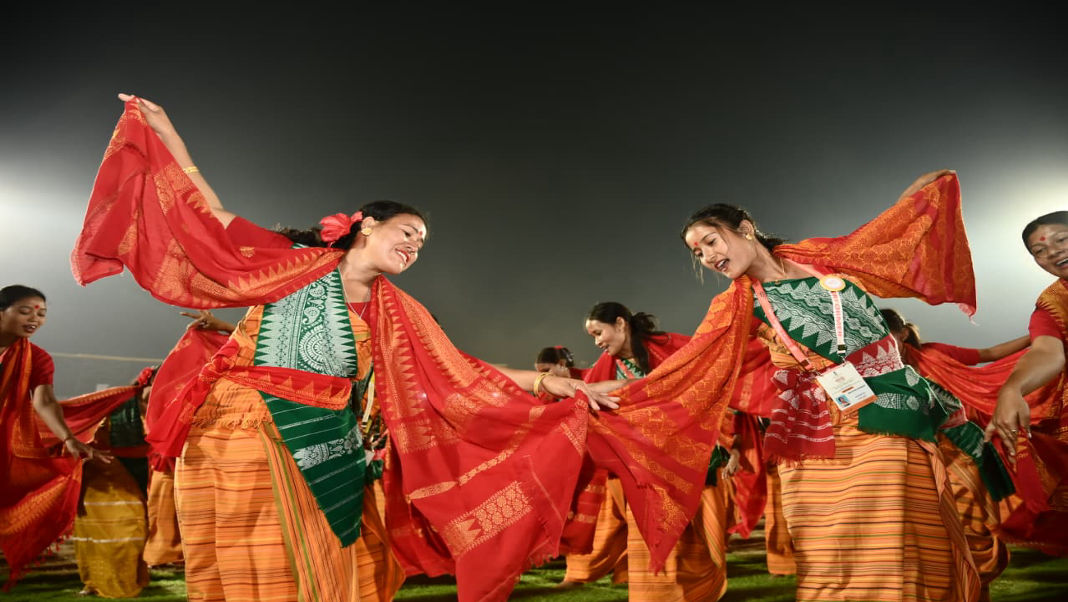

Guwahati, Jan 17: Prime Minister Narendra Modi will witness a performance of the Bagurumba dance this evening during his visit to Assam, drawing national attention to a traditional art form of the Bodo community that scholars describe as one of the most profound cultural expressions of Northeast India.
Often referred to as the “Butterfly Dance,” Bagurumba is distinguished by its close relationship with the natural world and is deeply embedded in the social and spiritual life of the Bodos.
A recent ethnographic study by Chandramukhi Boro of Gauhati University describes Bagurumba as “one of the most expressive cultural forms of Northeast India, embodying the community’s relationship with nature, spirituality, and identity.”
Assam minister U G Brahma said the origins of the dance are so ancient that they cannot be traced through conventional folk history.
“Even folk history of human civilisation cannot trace the exact origin of the song Bagurumba and its dance. It is most often performed as a joyful celebration after the hard work of the summer season, where young girls dance together, imagining love for an imaginary life partner,” he said.
Unlike many Indian dance traditions rooted in mythology or courtly patronage, Bagurumba draws directly from ecology and everyday life. According to the researcher, the dance’s movements—imitating butterflies, flowing rivers and swaying trees—visually express the Bodo philosophy of harmony with nature.
Traditionally performed by Bodo women during Bwisagu, the Bodo New Year festival, Bagurumba has survived for generations without written choreography. Instead, it has been passed down through oral tradition and practice. As the study notes, “Bagurumba is not merely a performance; it is a lived tradition that embodies the Bodos’ interaction with their immediate natural and spiritual environment.”
The dance is historically linked to Bathouism, the indigenous belief system of the Bodos, and symbolically reflects the five elements of creation. Women continue to play a central role in preserving the form, with the research highlighting them as the primary custodians ensuring inter-generational transmission.
Once largely confined to village spaces and rarely seen by outsiders, Bagurumba entered the national spotlight when it was performed at the Republic Day celebrations in 1957. Since then, it has travelled from village courtyards to major cultural platforms in India and abroad. Yet, the study observes that “Bagurumba continues to serve as a living tradition, maintaining its core identity while adapting to the changing socio-cultural landscape.”
The Prime Minister’s presence at today’s performance is being seen as a moment of national recognition for Bodo cultural heritage, highlighting the importance of safeguarding indigenous traditions amid rapid cultural change.
Calling for wider global recognition, Brahma said, “Let us make Bagurumba the most popular dance of the world.” He added that Bagurumba is regarded as the national dance of the Bodos and is not restricted to a particular season or festival.
“It represents joy, renewal and gratitude toward nature,” he said.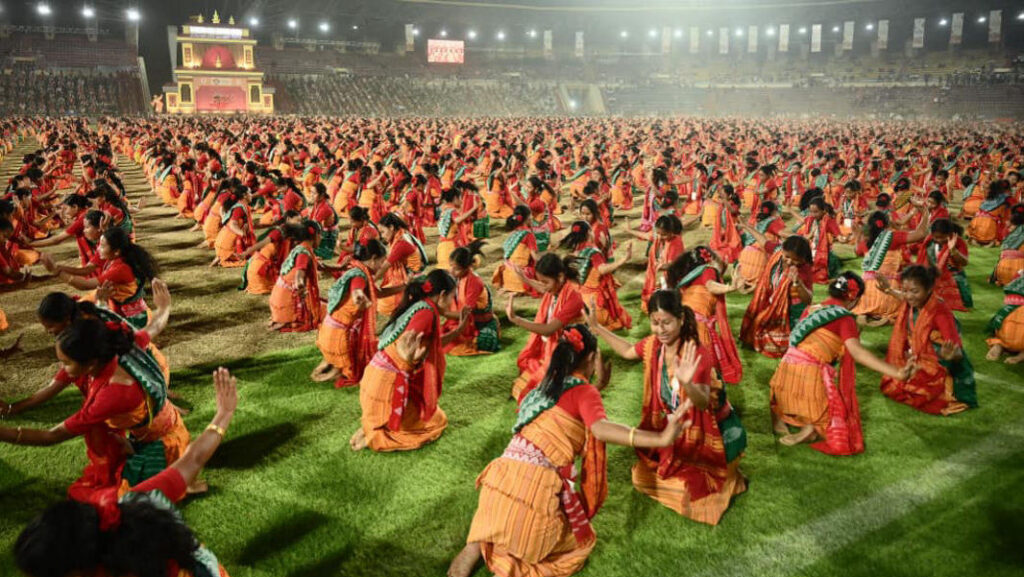
As Bagurumba unfolds before a national audience this evening, it offers more than a visual spectacle—providing insight into how nature, spirituality and women-led traditions continue to shape Bodo cultural life in Assam.
Also Read: Unexplored Ahom-era sites in Tirap to be taken up for preservation: Arunachal minister
Also Watch
Find latest news from every corner of Northeast India at hubnetwork.in, your online source for breaking news, video coverage.
Also, Follow us on
Twitter-twitter.com/nemediahub
Youtube channel- www.youtube.com/@NortheastMediaHub2020
Instagram- www.instagram.com/ne_media_hub
Download our app from playstore – Northeast Media Hub