


Albert Sangma
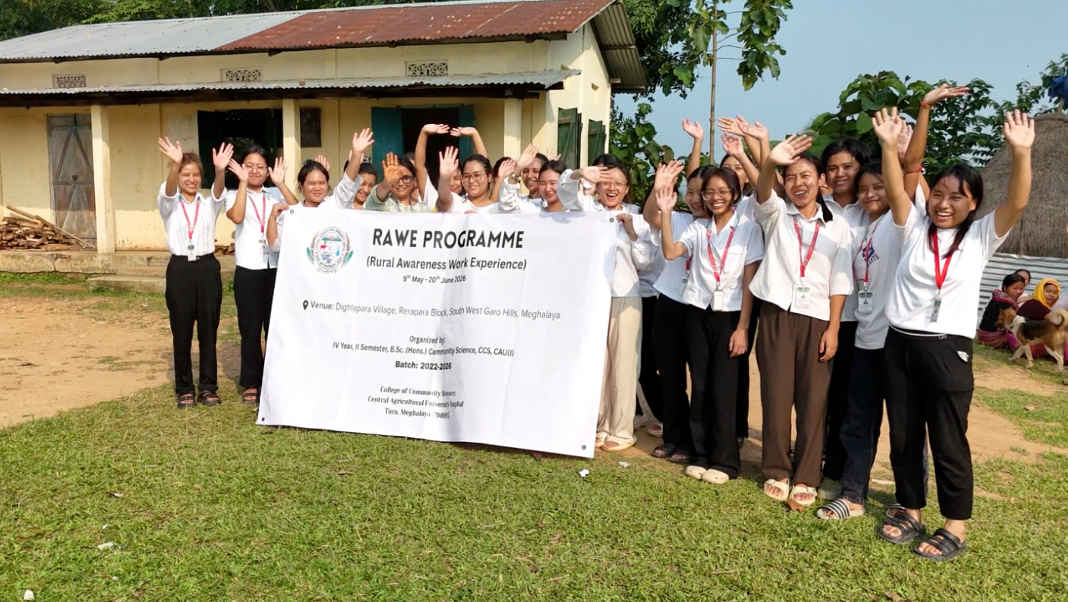
Diglapara, South West Garo Hills, June 11: For the past month, a group of 28 students from the College of Community Science (CCS), Tura, have been living in Diglapara village in South West Garo Hills, spending their days visiting households, interacting with villagers, conducting surveys and helping families explore ways to improve nutrition and livelihoods.
For the fourth-year students, the experience has transformed the village into a classroom unlike any they have known before.
“We conduct surveys with each family assigned to us regarding food, nutrition and livelihood opportunities. The villagers have been very cooperative and are taking the advice seriously,” Sheetal Thangjam told Hub News.
Sheetal is one of 28 students participating in the Rural Awareness Work Experience (RAWE) programme, a mandatory component of the B.Sc curriculum that places students in villages for hands-on learning and community engagement.
 The all-women group arrived in Diglapara on May 11 and has been living at the village community hall ever since. What began as a field assignment has gradually evolved into something far more personal. The students have become familiar faces in the village, spending their days visiting households, conducting surveys, organising training programmes and building relationships with families.
Twenty-four-year-old Naaz Ajmal remembers that the first few days were not easy.
“When we first arrived, there were some difficulties because of language barriers. But many villagers knew Hindi and helped us communicate with others. Over time, we developed a good understanding with the community,” she said.
That understanding is now visible across the village. Children greet the students by name, women gather eagerly for training sessions and villagers often stop by the community hall to chat or offer seasonal fruits and vegetables from their homes.
The students say it was the warmth of the villagers that surprised them most.
“When we came here, people would bring fruits and refuse to take money. We had to insist that they charge us according to the quantity,” one of the students recalled.
 The RAWE programme is designed to expose students to rural realities while helping communities strengthen nutrition, livelihoods and resource management. The 28 students have collectively adopted 51 households in Diglapara. Most students are responsible for two families each, while one student has been assigned an additional household.
Their responsibilities extend well beyond surveys and data collection. They spend time with families, study food consumption patterns, assess the nutritional status of women and children, and suggest ways to improve diets using seasonal and locally available foods.
The programme is divided among the five departments of the College of Community Science — Food Science and Nutrition, Family Resource Management, Textiles and Apparel Designing, Human Development and Family Studies, and Home Science Extension and Communication Management.
Across the village, the impact of the programme can already be seen.
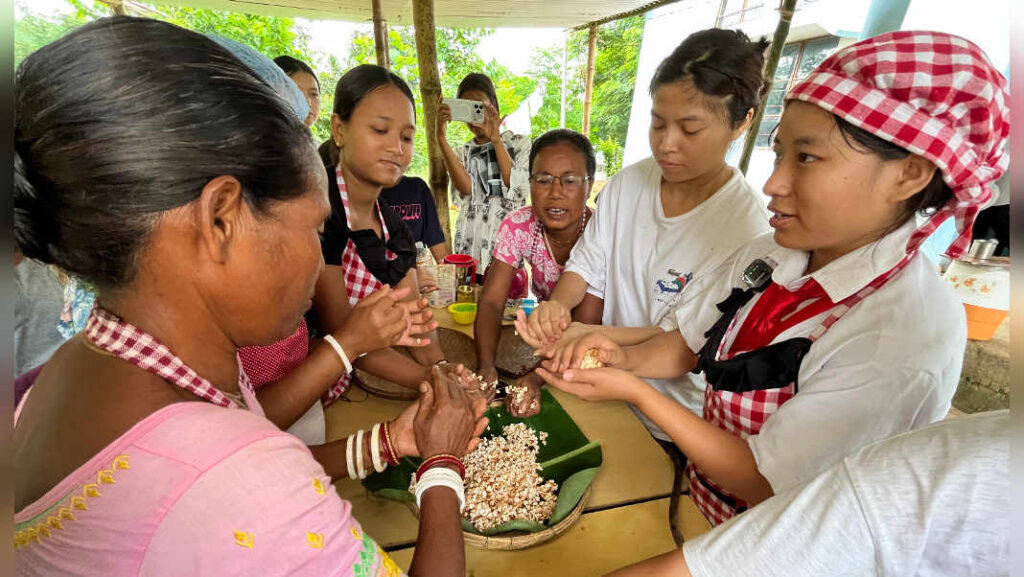
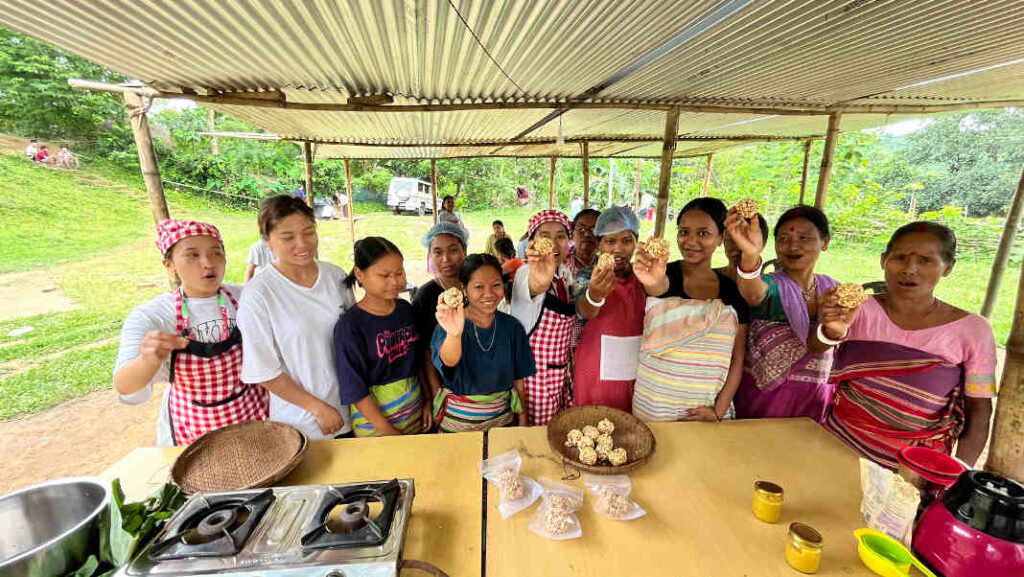
Women who had never operated a sewing machine before are now learning stitching and embroidery. Several families have been introduced to food preservation techniques and taught how to prepare value-added products such as jackfruit jam, mango jam, nutritious laddoos, incense sticks and handmade dolls.
The students have also established kitchen gardens and demonstrated vermicomposting techniques, encouraging families to grow vegetables and manage organic waste more effectively.
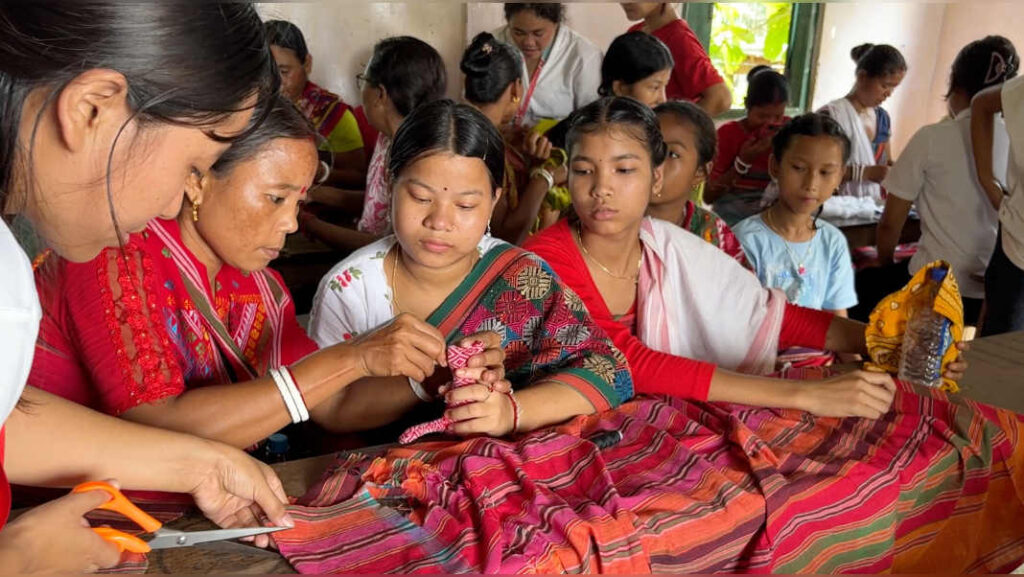 For many villagers, the programme has opened doors to new skills and possibilities.
Sixty-year-old Sumitra Koch and fifty-three-year-old Heroni Koch say they have learnt things they never imagined they would.
“We are blessed that CCS-Tura chose our village,” they said. “Because of these young students, we have learnt to make dolls, prepare incense sticks and make nutritious laddoos, jackfruit jam and mango jam.”
The students’ work has also extended to local schools. They have prepared low-cost teaching aids, including counting cards, educational charts and shape-learning materials. Classroom walls have been painted with colourful illustrations to make learning more engaging for children.
Dr Yoya Luithui, Assistant Professor in the Department of Food Science and Nutrition, said the programme has helped students develop confidence while learning how communities function beyond textbooks.
“Compared to the initial days, the students are now more involved and have built a strong rapport with the villagers. Although language and communication were challenges in the beginning, most of these issues have been overcome. I am happy to see the students taking initiative, preparing products and actively interacting with the community,” she said.
The 45-day programme will conclude on June 20 with a valedictory function where villagers and students will jointly showcase the products, skills and activities developed during their time together.
After that, the students will return to campus to prepare departmental presentations as part of their academic requirements.

For the villagers, the programme has brought new skills, fresh ideas and opportunities for supplementary income. For the students, it has provided a deeper understanding of rural life and community development than any classroom lesson could offer.
When they leave Diglapara later this month, they will carry back more than reports and survey findings. They will leave with friendships, memories and a lasting connection to a village that welcomed them as its own.
Also Read: Why health messages often fail: Northeast experts turn to behavioural science
Also Watch
Find latest news from every corner of Northeast India at hubnetwork.in, your online source for breaking news, video coverage.
Also, Follow us on
Twitter-twitter.com/nemediahub
Youtube channel- www.youtube.com/@NortheastMediaHub2020
Instagram- www.instagram.com/ne_media_hub
Download our app from playstore – Northeast Media Hub

, Tura, have been living in Diglapara village in South West Garo Hills, spending their days visiting households, interacting with villagers, conducting surveys and helping families explore ways to improve nutrition and livelihoods.)