

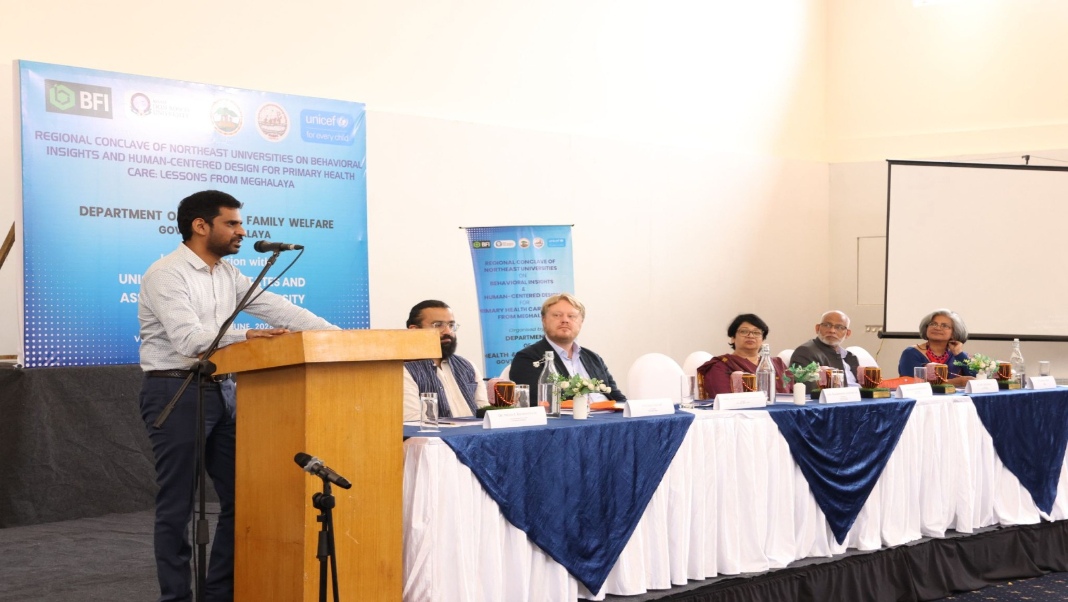

SHILLONG, June 11: Why do some pregnant women miss antenatal check-ups even when health services are available nearby? Why do families delay seeking treatment despite knowing the risks? And why do some public health interventions succeed in one community but fail in another?
For health experts gathered in Shillong this week, the answer lies in a simple but often overlooked reality: people do not make decisions based on information alone.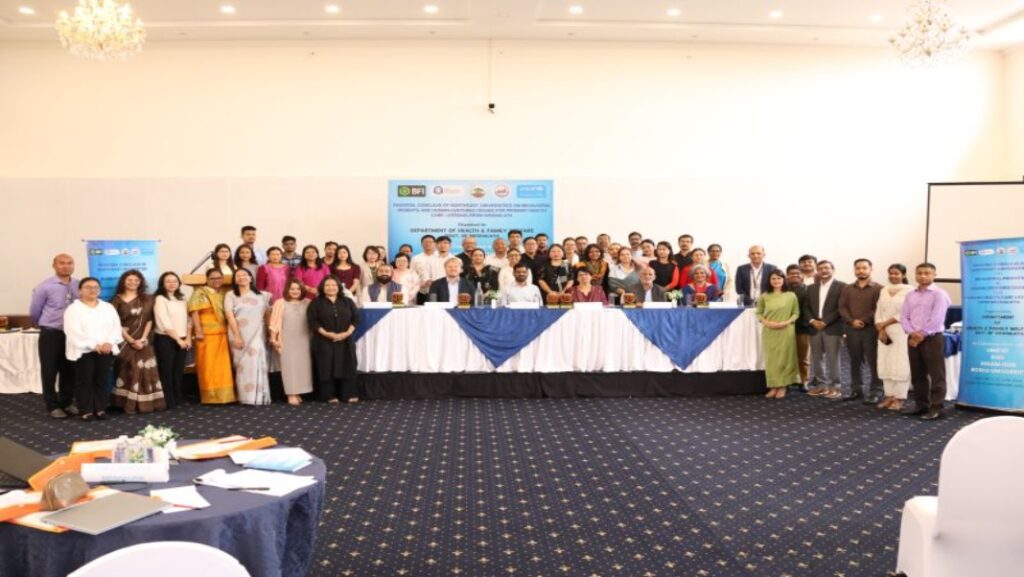
The questions were at the centre of the Regional Conclave of Northeast Universities on Behavioural Insights and Human-Centered Design for Primary Health Care, held on June 10-11. Organised by the State Health Systems Resource Centre (SHSRC) Meghalaya in partnership with UNICEF, Assam Don Bosco University, the North-East Social and Behavior Change Alliance and Blockchain for Impact (BFI), the conclave brought together academics, policymakers, public health professionals and development partners from across the region to examine how human behaviour shapes health outcomes.
The two-day meeting explored how behavioural science and human-centred design can help make healthcare programmes more responsive to the realities of people’s lives.
Speaking at the inaugural session, Meghalaya Health Secretary and National Health Mission Mission Director Ramakrishna Chitturi said public health systems often focus heavily on implementing programmes but spend less time understanding the problems communities actually face.
“Human-centred design sounds intuitive, but in public health we often focus on rolling out interventions rather than solving the problems that matter most to people,” he said.
Chitturi noted that governments and institutions frequently invest significant resources in individual initiatives, yet long-term impact remains elusive when communities are not meaningfully engaged. Sustainable change, he argued, requires continuous feedback, learning and adaptation rather than one-time solutions.
He expressed hope that the conclave would help create a network of universities across the Northeast capable of generating evidence, supporting innovation and strengthening community-centred approaches to healthcare.
The discussions reflected a growing recognition within public health that awareness campaigns and service delivery alone are often insufficient to change behaviour. A mother may understand the importance of antenatal care but still miss appointments because of household responsibilities, lack of family support, transport challenges or prevailing social norms. Likewise, families may delay seeking treatment not because they are unaware of the risks, but because of economic pressures, cultural beliefs or previous experiences with the health system.
Dr. Valerie Laloo, State Nodal Officer of SHSRC Meghalaya, said understanding such realities is essential to building healthier and more resilient communities. She stressed that effective solutions begin with listening to people and understanding how they experience health challenges in their daily lives.
Madhulika Jonathan, Chief of Field Office at UNICEF India, echoed the sentiment, reminding participants that every health statistic represents an individual story.

“Behind every number is a life,” she said, adding that health systems can design more effective interventions when they pay closer attention to the lived realities of communities.
Participants noted that the Northeast’s geographical diversity, cultural complexity and varied healthcare challenges make it an important setting for developing community-responsive approaches to healthcare.
Dennis Christian Larsen, Chief of Social and Behaviour Change at UNICEF, said the region has much to contribute to global conversations on behavioural science and public health while also benefiting from lessons learned elsewhere.
Nagakarthik MP, Vice-President of Blockchain for Impact, highlighted the importance of creating spaces where communities can voice their concerns before solutions are designed. He said philanthropy should support processes that enable deep listening and community engagement rather than focusing solely on funding programmes.
The conclave also sought to strengthen the role of universities and higher education institutions in addressing healthcare challenges. Participants discussed how academic institutions can contribute research, behavioural insights and locally grounded evidence to improve reproductive, maternal, newborn and child health programmes as well as broader primary healthcare initiatives.
A recurring message from the discussions was that health decisions are shaped not only by knowledge but also by family dynamics, social norms, culture and lived experiences. Speakers argued that improving health outcomes requires moving beyond designing programmes for communities and towards designing them with communities.
Also Read: UNC calls 24-hour shutdown across Naga areas after six hostages found dead
Also Watch
Find latest news from every corner of Northeast India at hubnetwork.in, your online source for breaking news, video coverage.
Also, Follow us on
Twitter-twitter.com/nemediahub
Youtube channel- www.youtube.com/@NortheastMediaHub2020
Instagram- www.instagram.com/ne_media_hub
Download our app from playstore – Northeast Media Hub