

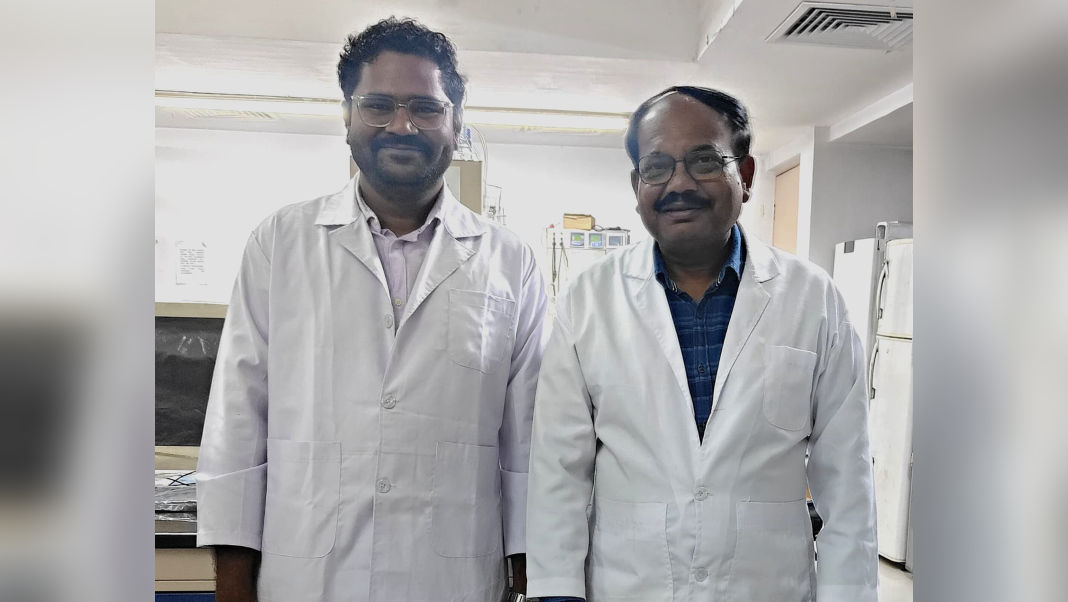

Guwahati, Sept 12: In a major breakthrough, researchers at the Indian Institute of Technology (IIT) Guwahati have developed a new method to produce human insulin using a safe and efficient bacterial system, Pseudomonas fluorescens. The innovation could make insulin — a life-saving drug for millions of people with diabetes — more affordable and accessible.
The research team was led by Prof. Veeranki Venkata Dasu, from the Department of Biosciences and Bioengineering, along with scholars Ansuman Sahoo, Prabir Kumar Das, Dr. MSRC Murthy, and Prof. Sanjukta Patra. Their work has already been granted two Indian patents and published in leading journals such as the International Journal of Biological Macromolecules and the Journal of Biotechnology.
Currently, most insulin is produced using E. coli bacteria. While effective, it requires complicated and expensive processing because the insulin is formed in insoluble lumps. Other systems, such as yeast or mammalian cells, also face limitations, making insulin production costly worldwide.
The IIT Guwahati team’s method, however, uses Pseudomonas fluorescens — a safe (BSL-1) bacterium that produces insulin in soluble form. This means fewer purification steps, lower costs, and a more efficient production process. The approach also avoids toxic chemicals, making it eco-friendly and sustainable.
“This system is not only capable of producing insulin but also opens the door to making other therapeutic proteins and industrial enzymes,” Prof. Dasu said.
Highlighting the significance of the research, Ansuman Sahoo, Ph.D. and PMRF research scholar at IIT Guwahati, said:
“The most common method of producing insulin is by using a bacterium called Escherichia coli, or E. coli. Though effective, these bacteria produce insulin in the form of insoluble lumps and require complex processing to make the insulin usable. Other systems, such as yeast and mammalian cells, have also been used to produce insulin, but come with certain limitations, making them less sustainable. Food-grade compounds can be used in place of toxic inducers in the established expression system.”
With 537 million adults currently living with diabetes worldwide — a number expected to rise to one in eight adults by 2050 — the demand for affordable insulin has never been greater.
“The safety of the bacterium, combined with its ability to produce large amounts of soluble protein without harmful by-products, makes this method particularly attractive for large-scale insulin production,” an IIT Guwahati statement said.
The statement added that with insulin demand projected to grow sharply, especially with the rise of non-invasive delivery methods like oral insulin, there is a pressing need for affordable production methods.
“By eliminating the common limitations associated with current expression systems, this new approach explores the potential to make insulin more widely available at a lower cost.”
“The developed technology represents a significant step forward in the pursuit of affordable healthcare solutions and could play a vital role in ensuring life-saving treatments reach those who need them most.”
Also Read: Govt to reconstruct Meghalaya House in Vellore to increase capacity
Also Watch
Find latest news from every corner of Northeast India at hubnetwork.in, your online source for breaking news, video coverage.
Also, Follow us on-
Twitter-twitter.com/nemediahub
Youtube channel- www.youtube.com/@NortheastMediaHub2020
Instagram- www.instagram.com/ne_media_hub
Download our app from playstore – Northeast Media Hub

 Guwahati have developed a new method to produce human insulin using a safe and efficient bacterial system, Pseudomonas fluorescens. The innovation could make insulin — a life-saving drug for millions of people with diabetes — more affordable and accessible.)