

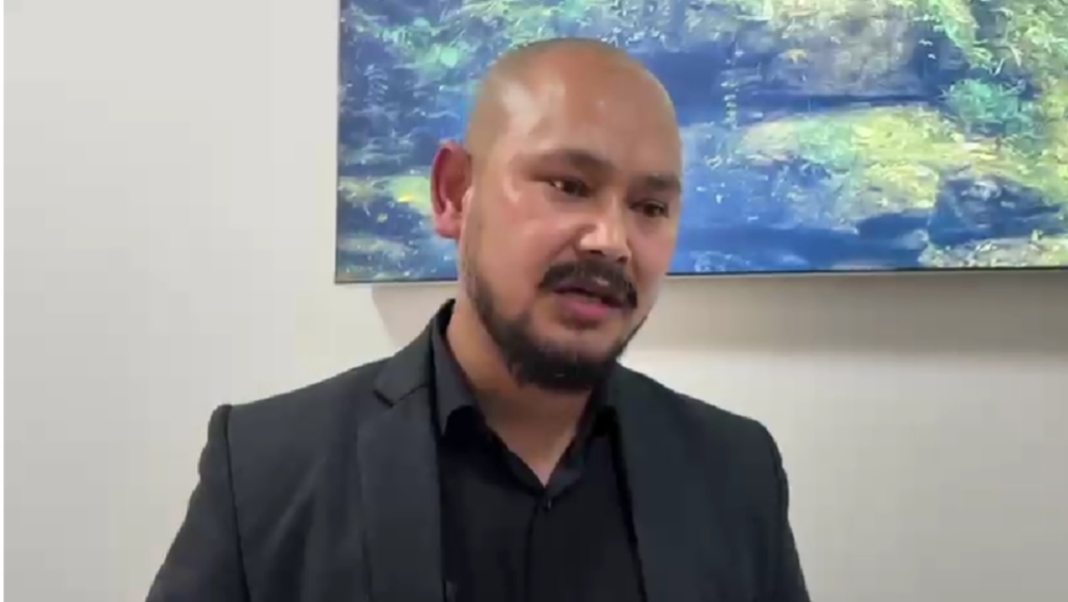

SHILLONG, MAY 13: Laban MDC Ricky Shullai on Wednesday submitted a memorandum to Chief Minister Conrad K Sangma seeking declaration of November 1 as a state holiday to honour Rev JJM Nichols-Roy’s constitutional and historical role in shaping the Sixth Schedule.
In his memorandum, Shullai described Rev Nichols-Roy as “a Member of the Constituent Assembly of India and one of the principal architects and foremost defenders of the Sixth Schedule to the Constitution of India.”
He recalled that during the September 6, 1949 debate on the draft provisions, Nichols-Roy “firmly declared: ‘Our aspiration is with India,’” advocating autonomy within the Indian Union while rejecting proposals to detach the hill areas from India.
The Sixth Schedule, which came into force on January 26, 1950, was termed “a unique constitutional innovation providing legislative powers, executive authority, protection of tribal land, recognition of customary laws, and preservation of traditional institutions.”
This framework led to the inauguration of the United Khasi-Jaintia Hills Autonomous District Council on June 27, 1952.
Shullai noted that the Sixth Schedule continues to shape governance in Meghalaya and is studied nationally, including in civil services examinations and academic institutions, as a model of asymmetric federalism and tribal self-governance.
Since Nichols-Roy’s passing on November 1, 1959, the District Council has officially acknowledged his foundational contribution and has since continued observing the day in remembrance.
The memorandum underlined Nichols-Roy’s collaboration with national leaders including Gopinath Bordoloi, Dr. B.R. Ambedkar, Jawaharlal Nehru, and Sardar Vallabhbhai Patel. It also pointed to historical records that Nehru “visited and was hosted by Rev. Nichols-Roy at his residence ‘Mountain View’ in Qualapaty, Shillong, where discussions relating to the hill areas and constitutional safeguards took place.”
Stressing contemporary relevance, the memorandum said several regions and intellectual groups across India continue to study the Sixth Schedule “as a mechanism for safeguarding indigenous identity, land rights, and local self-governance,” adding that the framework Nichols-Roy defended “continues to influence contemporary debates relating to tribal autonomy and governance in India.”
Shullai argued that declaring November 1 a state holiday would formally acknowledge Nichols-Roy’s foundational contribution, strengthen constitutional awareness among future generations, and reinforce Meghalaya’s commitment to tribal autonomy within the Indian Union.
It would also encourage educational and public institutions to organise programmes on the Sixth Schedule and indigenous self-governance while preserving the intellectual and constitutional legacy of “one of the foremost defenders of tribal autonomy in India.”
Though the Sixth Schedule emerged from the North-East Frontier (Assam) Tribal and Excluded Areas Sub-Committee under Gopinath Bordoloi, the memorandum said Nichols-Roy “played a decisive intellectual, constitutional, and political role in defending and refining the framework within the Constituent Assembly.”
It credited him with articulating autonomy within the Indian Union, defending safeguards for tribal land and customary laws, rejecting both integration without safeguards and political isolation, and giving “moral and philosophical grounding to the idea of Autonomous District Councils as institutions of self-governance.”
His intervention, it said, helped secure acceptance of the autonomy model in the final Constitution.
“Rev JJM Nichols-Roy’s contribution transcends political and denominational lines. Recognition at the State level would not merely commemorate a leader but institutionalise respect for the constitutional framework that safeguards the identity, rights, customs, and autonomy of the people of Meghalaya,” the memorandum concluded, requesting that the enclosed document be read with the Khasi Hills Autonomous District Council’s official proceedings on the matter.