

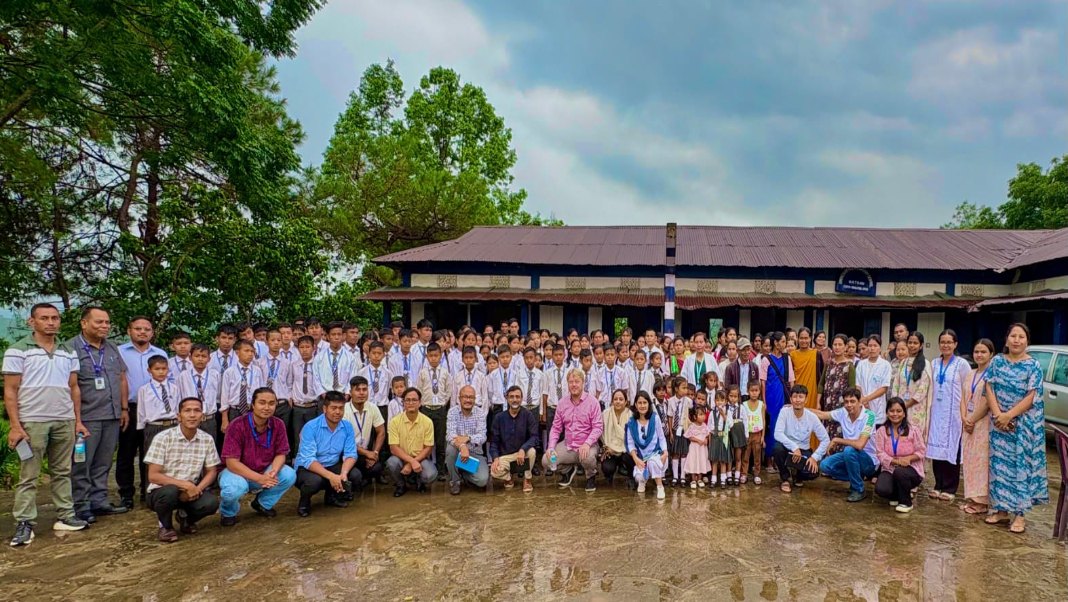

Shillong, June 12: Meghalaya’s efforts to improve maternal and child health through community-driven behavioural interventions have drawn the attention of UNICEF India, with senior officials visiting a village in Ri-Bhoi district to assess grassroots innovations aimed at boosting immunisation coverage and identifying high-risk pregnancies.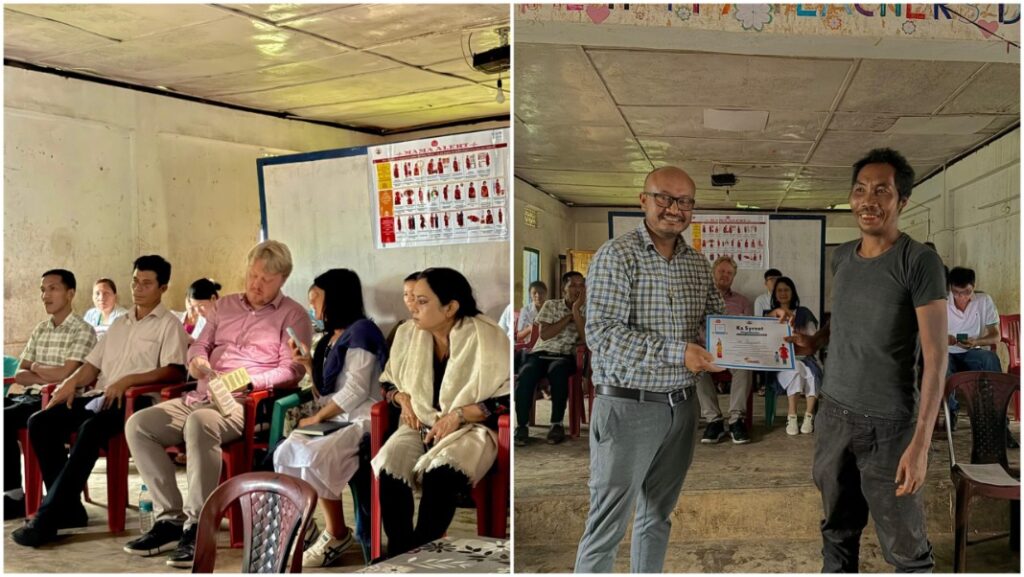
Dennis Christian Larsen, Chief of Social and Behaviour Change (SBC) at UNICEF India, along with officials from UNICEF’s Delhi and Assam offices, visited Umpathaw village under Umling Block on June 11 to observe how behavioural insights are being translated into action through locally designed health interventions.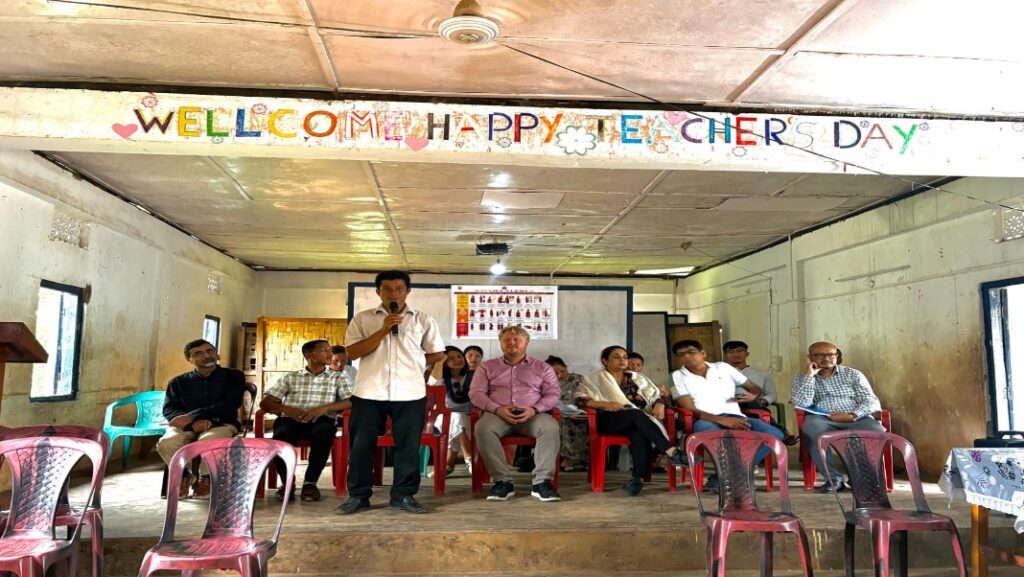
The visit focused on understanding how communities are helping address persistent public health challenges, including vaccine hesitancy and gaps in maternal healthcare. UNICEF officials interacted with frontline health workers, community leaders, fathers, adolescents, schoolchildren and “Buddy Mothers” to assess factors influencing health-seeking behaviour and the effectiveness of community-led solutions.
The initiatives are being implemented under the GAVI Health Systems Strengthening (HSS-3) programme by Tattva Foundation in partnership with the Government of Meghalaya, NHM Meghalaya and UNICEF India. The programme seeks to increase demand for routine immunisation and reduce the number of “zero-dose” children—those who have not received even a single vaccine dose.
Key interventions include community mobilisation campaigns, greater involvement of fathers in child healthcare decisions, public recognition of fully immunised children and support networks led by experienced mothers.
The delegation also reviewed the ongoing Maternal, Newborn and Child Health-Human Centred Design (MNCH-HCD) programme, which uses behavioural and design-based approaches to identify and support high-risk pregnancies. Tools such as the Mama Alert Card and other community-developed solutions are being used to strengthen early detection and referral systems.

The programme is being implemented through a collaboration involving NHM Meghalaya, the State Health Systems Resource Centre (SHSRC), UNICEF India and Tattva Foundation, with academic support from Assam Don Bosco University and IIT Bombay.
Officials said the field visit highlighted the importance of designing health interventions around the realities of local communities. The approach is based on understanding people’s capability, opportunity and motivation—known as the COM-B behavioural framework—to create solutions that are practical, acceptable and sustainable.
Public health experts involved in the programme said the experience reinforced a key lesson: lasting improvements in maternal and child health depend not only on access to services but also on building trust, community ownership and participation in decision-making.
Also Read: James K Sangma declared Rajya Sabha MP from Meghalaya, prioritizes language & ILP push
Also Watch
Find latest news from every corner of Northeast India at hubnetwork.in, your online source for breaking news, video coverage.
Also, Follow us on
Twitter-twitter.com/nemediahub
Youtube channel- www.youtube.com/@NortheastMediaHub2020
Instagram- www.instagram.com/ne_media_hub
Download our app from playstore – Northeast Media Hub