


ROOPAK GOSWAMI
Shillong, June 7: Around 30 butterfly species that once fluttered across Meghalaya and Northeast India have not been recorded in India for decades, according to a newly published book, raising concerns that some may have slipped into local extinction while others await rediscovery in the region’s remaining wild habitats.
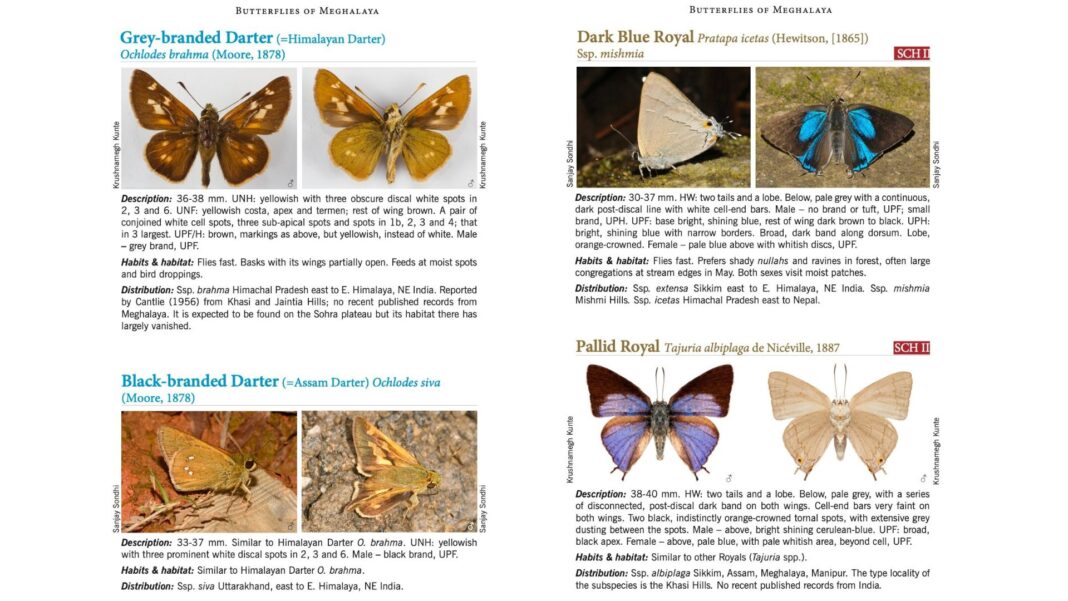
The recently published Butterflies of Meghalaya highlights a group of species known only from historical records and museum specimens, drawing attention to one of the state’s most intriguing conservation mysteries.
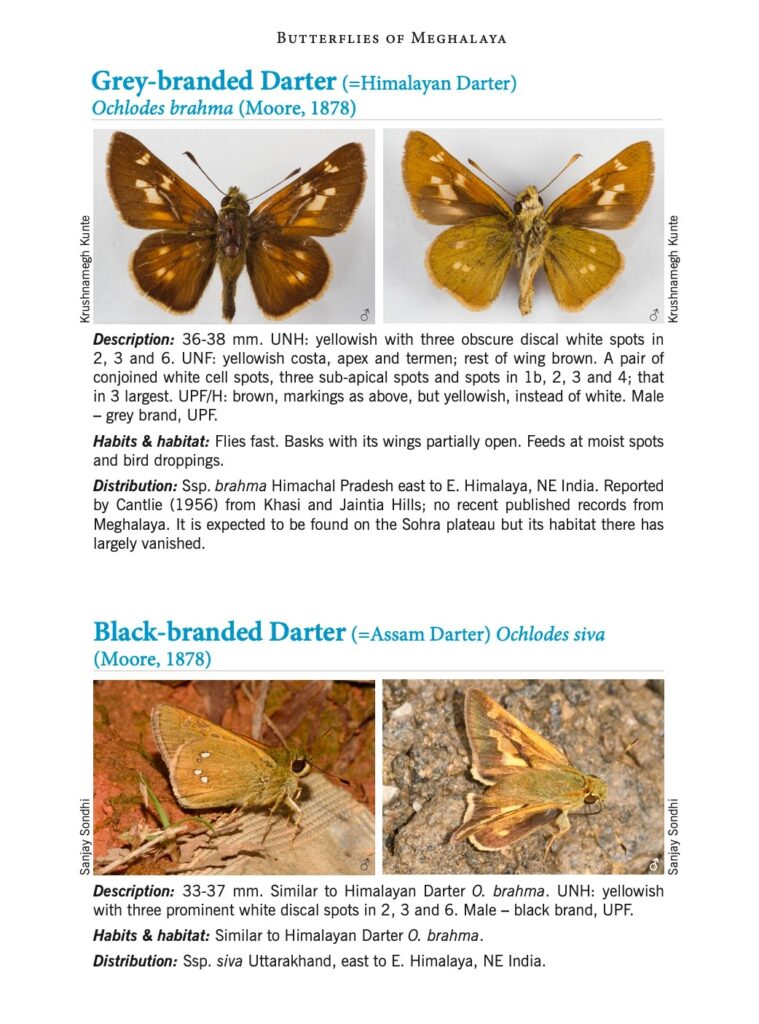
Among the butterflies featured are the Ochreous Darter (Ochlodes pasca), Pallid Royal (Tajuria albiplaga), Black-branded Royal (Tajuria culta), Tailless Metallic Green Hairstreak (Shirozuozephyrus khasia), Ferruginous Hairstreak (Ahlbergia leechii) and White-patch Five-ring (Ypthima davidsoni). None have been recorded in India for many decades, leaving scientists uncertain whether they have disappeared from the country or remain hidden in poorly surveyed habitats.
According to butterfly expert and co-author Sanjay Sondhi, around 30 species documented in the book fall into this category.
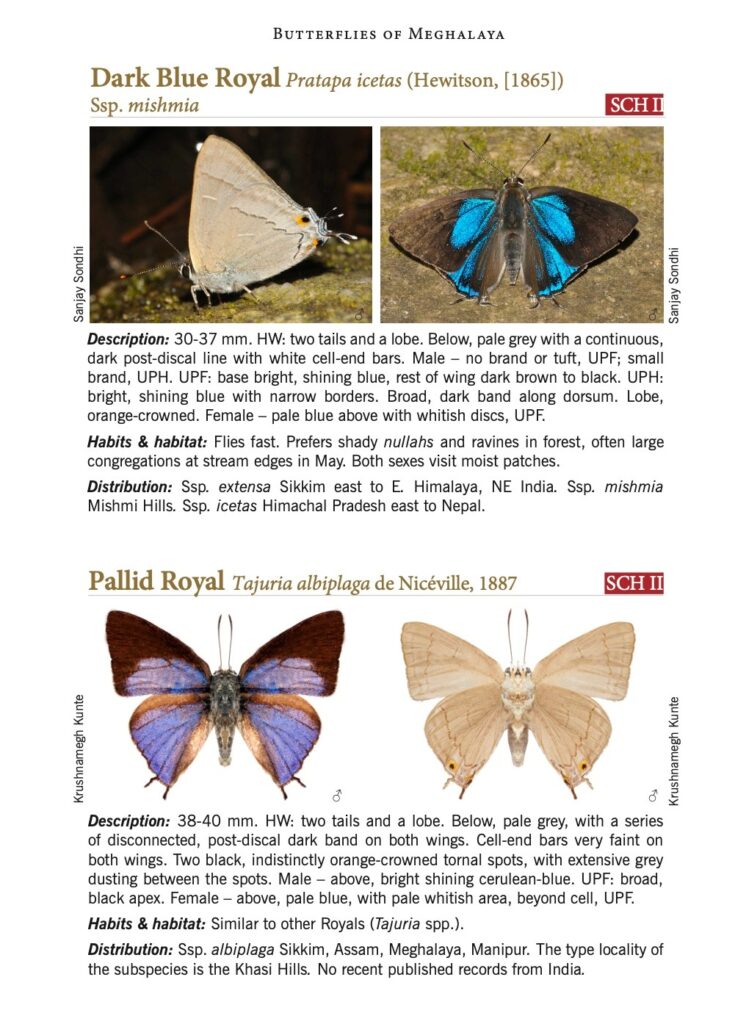
“About 30 butterfly species covered in the book have not been recorded in India for many decades. It is not known whether these species are locally extinct or have remained undiscovered due to habitat loss or lack of surveys,” Sondhi said.
The mystery is particularly significant because Meghalaya is one of India’s most important butterfly landscapes. The state hosts 698 documented butterfly species—nearly half of India’s known butterfly diversity—and contains extensive habitats that remain poorly explored by scientists.
The absence of recent records, Sondhi said, should also focus attention on growing threats facing butterfly habitats across the region.
“The two other points I would make are the impact of mass tourism and habitat loss,” he said, noting that increasing pressure on ecologically sensitive landscapes could pose additional risks to already rare and poorly understood species.
Butterflies are widely regarded as indicators of ecosystem health, making their disappearance a potential warning sign of broader ecological changes. Scientists say habitat fragmentation, changing land-use patterns and environmental degradation can affect butterfly populations long before the impacts become visible in larger animals.

Yet the story is not solely one of decline.
The possibility that some of these species may still survive in remote corners of Meghalaya offers hope for future rediscoveries. The state’s forests, grasslands and hill ecosystems remain incompletely surveyed, leaving open the possibility that some of the “lost” butterflies continue to persist in isolated habitats.
Sondhi believes Meghalaya’s extraordinary butterfly diversity also presents opportunities for conservation-linked livelihoods through nature tourism. He points to the Garo Hills, which he considers one of the three most important butterfly hotspots in Northeast India.
For more than a decade, local community members led by Plinder Marak of the Siju Conservation and Ecotourism Society have promoted butterfly tourism in the Baghmara Reserve Forest, Siju Wildlife Sanctuary, Rewak Wildlife Sanctuary and Balpakram National Park, demonstrating how biodiversity can support local livelihoods while encouraging habitat protection.
Similar efforts are underway in the Khasi Hills. Through his NGO, Titli Trust, with support from the Eicher Group Foundation and Royal Enfield, Sondhi and his team are promoting community-led butterfly tourism in Mawmluh and Raid Sawsymper in the Cherrapunji region.
Conservationists say such initiatives offer a model for balancing biodiversity protection with sustainable economic opportunities while creating incentives for local communities to safeguard habitats that may still harbour some of Meghalaya’s missing species.
For researchers, however, the immediate challenge remains finding answers about the state’s “ghost butterflies.” Whether these species have vanished from India, survive in isolated pockets of habitat, or are simply awaiting rediscovery remains unknown.
Their disappearance from scientific records serves as a reminder that biodiversity loss is not always dramatic or immediately visible. Sometimes species fade quietly from view, leaving behind only museum specimens, historical records and unanswered questions.
As scientists call for renewed surveys across Meghalaya’s forests, grasslands and hill ecosystems, the search for these missing butterflies has become both a conservation priority and a test of how much remains undiscovered in one of India’s richest biodiversity regions.
Also Read: Landowners given 60 days to vacate acquired land for Tura Bypass Project
Also Watch
Find latest news from every corner of Northeast India at hubnetwork.in, your online source for breaking news, video coverage.
Also, Follow us on
Twitter-twitter.com/nemediahub
Youtube channel- www.youtube.com/@NortheastMediaHub2020
Instagram- www.instagram.com/ne_media_hub
Download our app from playstore – Northeast Media Hub