

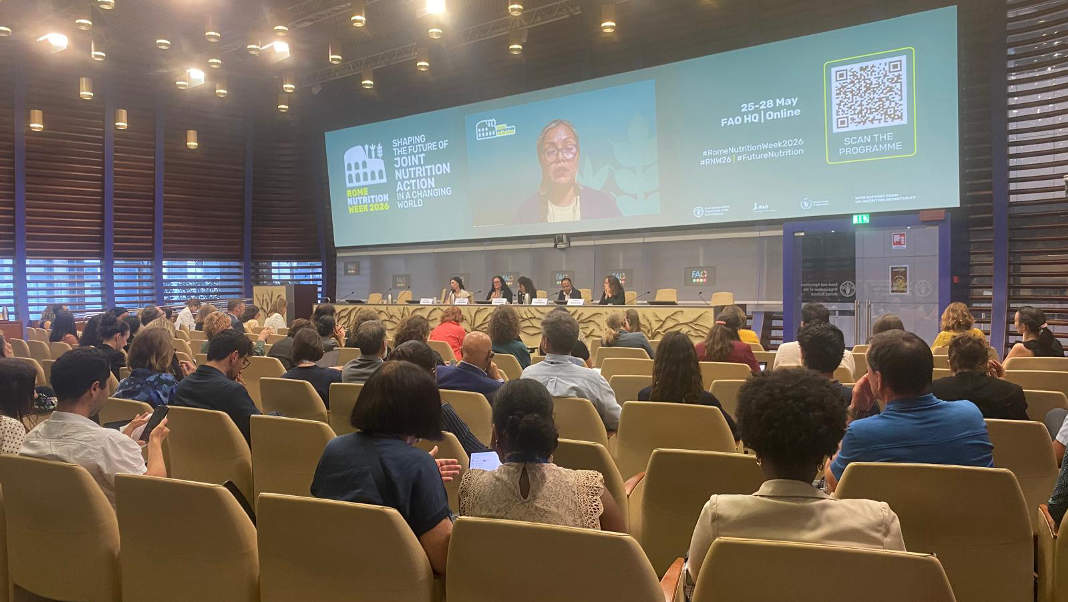

SHILLONG, May 28: Meghalaya-based agroecology organisation North East Society for Agroecology Support (NESFAS) has taken its indigenous school meals initiative to the global stage, presenting its work on improving child nutrition through traditional foods during the Rome Nutrition Week at the headquarters of the Food and Agriculture Organization in Italy.
The initiative was showcased from May 25 to 28 during the international event organised in Rome, where NESFAS was invited by the International Fund for Agricultural Development through the Indigenous Peoples Assistance Facility (IPAF).
Representing NESFAS at the summit were its Executive Director Pius Ranee and Founding Chairperson Phrang Roy.
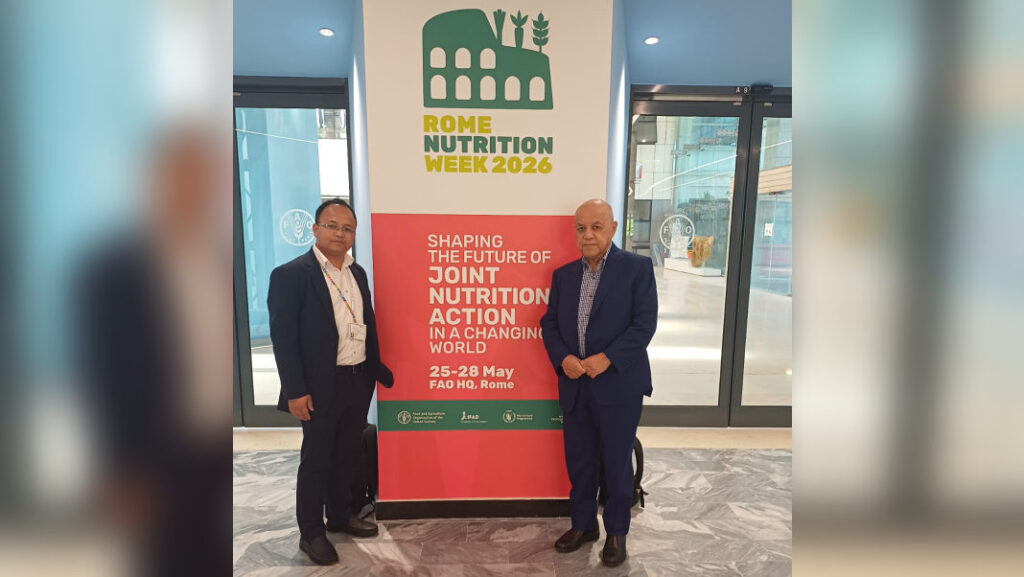
The presentation highlighted how indigenous and locally sourced foods are being integrated into school mid-day meals in Meghalaya to tackle malnutrition among children while also creating livelihood opportunities for local farmers.
The programme emerged from a major nutrition study conducted ahead of the 2015 Indigenous Terra Madre gathering hosted by NESFAS in Shillong and Mawphlang in collaboration with McGill University and the National Institute of Nutrition.
The study revealed alarming nutritional challenges despite the region’s rich biodiversity, finding that nearly 31 per cent of schoolchildren were undernourished while 57 per cent were underweight.
Following the findings, NESFAS began working with parents, teachers and local communities to introduce indigenous foods, including wild edible plants and green leafy vegetables, into school meals. The initiative also uses the IFAD Digital Toolbox and the FAO’s ten food groups model to improve dietary diversity.
The programme, which began as a pilot in 11 schools in 2022 with support from The Indigenous Partnership for Agrobiodiversity and Food Sovereignty (TIP), has now expanded to 26 schools benefiting more than 2,000 children across Meghalaya.
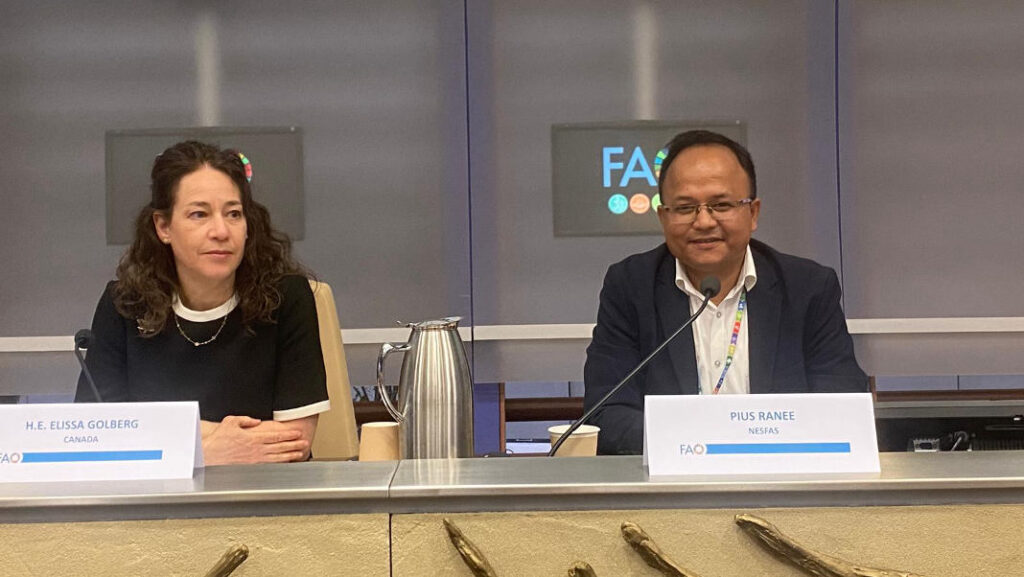
Speaking at the Rome event, Pius Ranee said the success of the initiative was driven by collective community participation, particularly by farmers who now supply local produce to schools and parents who voluntarily contribute vegetables and crops from kitchen gardens.
He said nutritional analyses conducted by NESFAS on wild edible plants showed that several indigenous species possess high nutritional value and could play an important role in combating anaemia and improving children’s health outcomes.
NESFAS also expressed its ambition to scale up the initiative across Meghalaya through stronger collaboration with government departments, communities and partner organisations.
The session at the Rome Nutrition Week was chaired by Elissa A. Golberg, Ambassador and Permanent Representative of Canada to the Rome-based UN food agencies.
Also Read: KAS says president Nonglait’s NPP byelection bid is ‘personal’, defends apolitical stance
Also Watch
Find latest news from every corner of Northeast India at hubnetwork.in, your online source for breaking news, video coverage.
Also, Follow us on
Twitter-twitter.com/nemediahub
Youtube channel- www.youtube.com/@NortheastMediaHub2020
Instagram- www.instagram.com/ne_media_hub
Download our app from playstore – Northeast Media Hub

 has taken its indigenous school meals initiative to the global stage, presenting its work on improving child nutrition through traditional foods during the Rome Nutrition Week at the headquarters of the Food and Agriculture Organization in Italy.)