

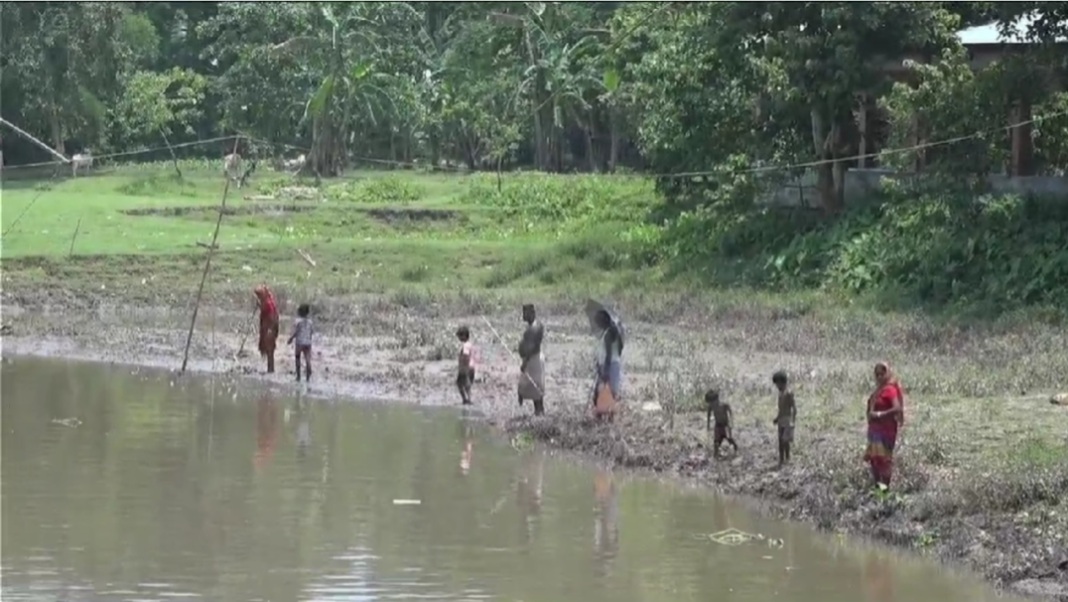

Boko, June 2: Thousands of dead fish floating along stretches of the Kharkhari River have once again triggered concerns over industrial pollution in Assam’s Boko region, with residents alleging that untreated effluents from industries operating in the nearby Chaygaon Industrial Centre are continuing to damage a river that supports both biodiversity and local livelihoods.
From Shola to Trilochan, riverbanks were reportedly strewn with dead fish over the past few days, including species such as Puthi, Khalihna, Dorikona and Borali. The sight has alarmed local communities, many of whom depend on the river for fishing, household use and agriculture.
Residents have alleged that contaminated wastewater released into the river is responsible for the latest fish deaths and have specifically pointed towards industries operating in the Chaygaon Industrial Centre. Similar allegations have surfaced in the past following earlier incidents of fish mortality in the river.
The recurring nature of the incidents has raised questions not only about industrial practices but also about regulatory oversight. Locals claim that despite repeated complaints over the years, effective monitoring and enforcement measures have remained inadequate.
Environmental observers warn that repeated pollution events can have consequences far beyond immediate fish deaths. Aquatic ecosystems often take years to recover from contamination, while repeated exposure to industrial pollutants can affect breeding cycles, reduce biodiversity and threaten the long-term health of river systems.
For families dependent on fishing, the impact is also economic. Several villagers said declining fish populations and recurring fish deaths have begun affecting livelihoods, adding uncertainty for communities already dependent on shrinking natural resources.
The latest incident has renewed calls for an independent investigation, scientific water quality testing and greater transparency regarding industrial waste management practices in the area. Residents argue that unless pollution sources are identified and addressed, the Kharkhari River could face long-term ecological degradation.
At stake is more than a river. For many villages in the region, the Kharkhari remains a source of livelihood, food and ecological balance. Each fresh episode of fish mortality raises a troubling question: how many warnings can a river give before the damage becomes irreversible?