

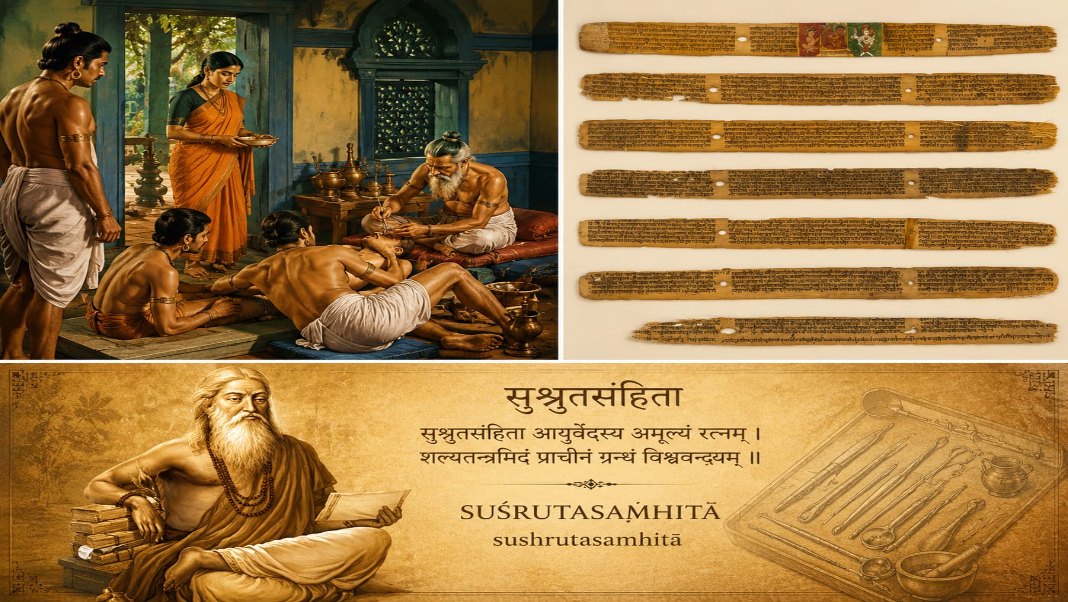

More than 2,600 years after he first put blade to skin, the world is still catching up to Maharishi Sushruta.
This week, the Royal College of Surgeons of Edinburgh — one of the world’s oldest and most respected surgical institutions — installed a bronze statue of the ancient Indian physician, a tribute many regard as long-overdue recognition of a man whose understanding of medicine, anatomy and surgery was centuries ahead of his time.
Urmi Bhattacharjee
Guwahati, June 24: For many, the installation of a bronze statue in Edinburgh may appear to be a routine honour bestowed upon a historical figure.
But the decision by the Royal College of Surgeons of Edinburgh to immortalise Maharishi Sushruta carries significance far beyond symbolism.
It is recognition of a scientific legacy that predates many of the foundations of modern medicine and a reminder that some of the earliest advances in surgery emerged not from Europe, but from the Indian subcontinent more than two and a half millennia ago.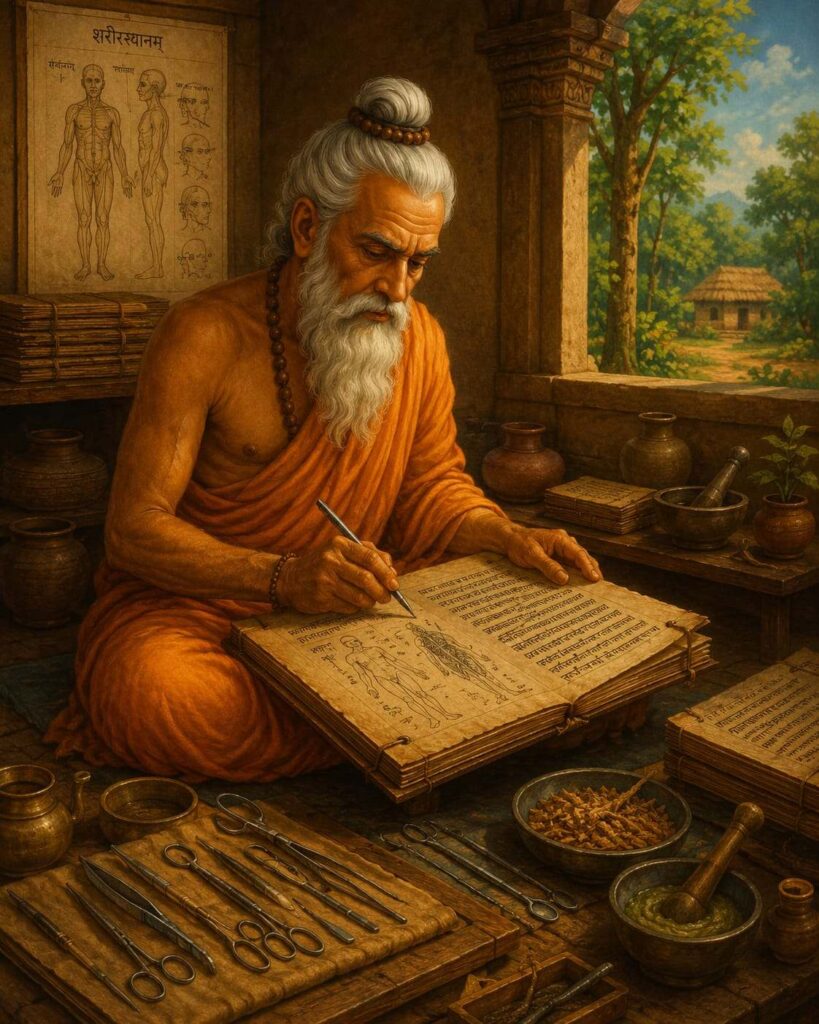
Long before Europe established medical schools, long before the emergence of modern hospitals and operating theatres, Sushruta was documenting surgical procedures, anatomical knowledge, medical ethics and specialised instruments in the Sushruta Samhita — a text widely regarded as one of the greatest medical works in human history.
Historians and medical scholars describe him as the Father of Surgery, while many also regard him as the Father of Plastic Surgery.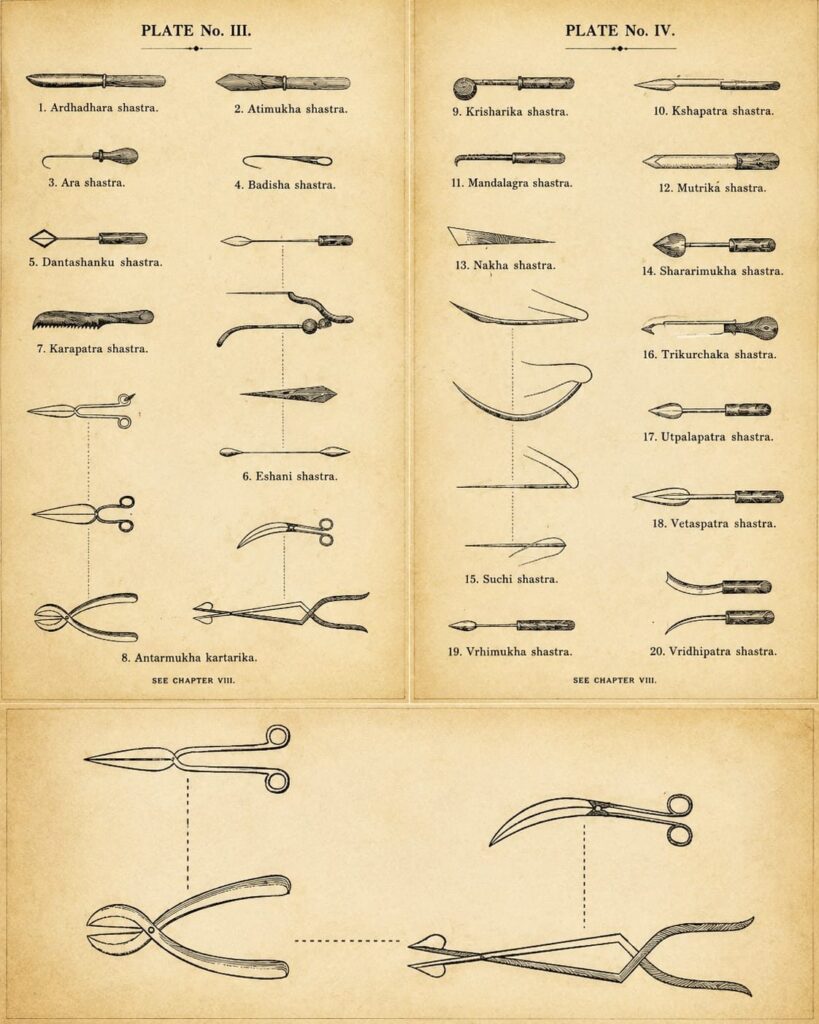
The Sushruta Samhita contains descriptions of more than 300 surgical procedures and over 120 surgical instruments. It discusses fracture management, wound care, cataract surgery, dentistry, childbirth, anatomy and reconstructive operations at a level of sophistication that continues to astonish modern surgeons.
The text was not merely a surgical manual. It was a comprehensive medical encyclopedia that classified surgeries into different categories, described techniques for treating fractures and dislocations, documented methods to control bleeding, listed hundreds of medicinal plants and formulations, and laid down ethical guidelines governing the conduct of physicians.
At a time when much of the world had only a rudimentary understanding of the human body, Sushruta advocated the study of cadavers as an essential part of medical education. His approach to training appears strikingly modern even today. Students were expected to practise surgical techniques on fruits, vegetables, leather bags and animal tissues before operating on human patients. The emphasis on simulation, observation and gradual mastery bears a remarkable resemblance to principles still used in medical schools across the world.
Sushruta also insisted that a physician must combine technical expertise with discipline, integrity and compassion. In his view, surgery was not merely a craft but a moral responsibility.
Among his most celebrated achievements was reconstructive surgery.
More than two millennia before plastic surgery became a recognised medical specialty, Sushruta described techniques for rebuilding damaged noses using skin taken from the forehead — a procedure remarkably similar to modern rhinoplasty.
In ancient India, the cutting off of the nose was often used as punishment for certain crimes and social offences. The demand for reconstruction led to innovations that would eventually make Sushruta one of the most influential figures in the history of plastic surgery.
What makes the story even more extraordinary is that these techniques did not disappear with time.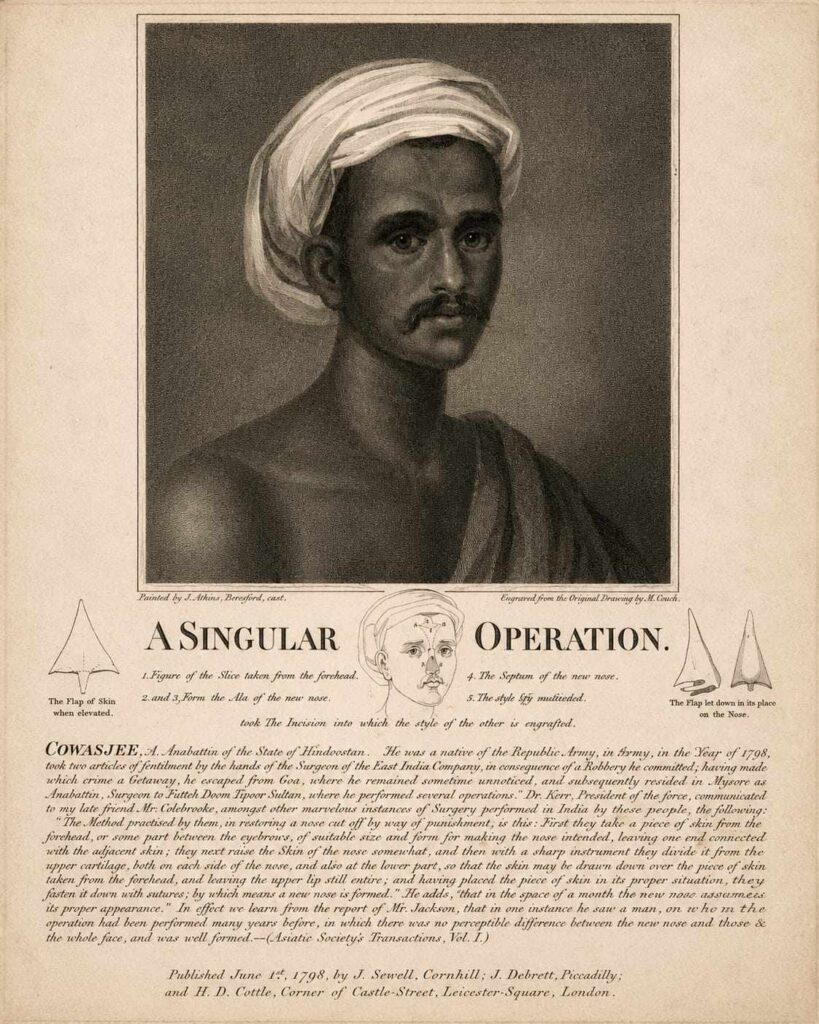
Centuries later, during the Anglo-Mysore wars, a man associated with Tipu Sultan’s forces reportedly underwent nose reconstruction by an Indian practitioner using a forehead-flap technique closely resembling the methods described by Sushruta. British surgeons witnessed the procedure and documented it with fascination.
Their reports travelled back to Europe and eventually inspired English surgeon Joseph Carpue, who successfully performed rhinoplasty in London in 1814 using what became known as the Indian method. Many historians regard this episode as one of the defining moments in the evolution of modern plastic surgery.
The influence of Sushruta had already begun spreading centuries earlier through translations of the Sushruta Samhita into Arabic, helping transmit Indian medical knowledge to other parts of the world.
That is what makes the Edinburgh tribute particularly significant.
Founded in 1505, the Royal College of Surgeons of Edinburgh occupies a special place in the history of surgical education. By honouring Sushruta, the institution is acknowledging that some of the earliest foundations of surgical science were laid thousands of years ago in the Indian subcontinent.
Today, as medicine is transformed by robotics, artificial intelligence and precision healthcare, the bronze figure standing in Edinburgh serves as a reminder that many of the principles underpinning modern surgery — rigorous training, anatomical knowledge, technical precision and ethical responsibility — were being articulated more than 2,600 years ago.
The statue is therefore not merely a tribute to an ancient healer.
It is recognition that one of the greatest chapters in the history of medicine began in India, and that the world is only now beginning to fully appreciate the scale of Maharishi Sushruta’s contribution to science, surgery and human health.