

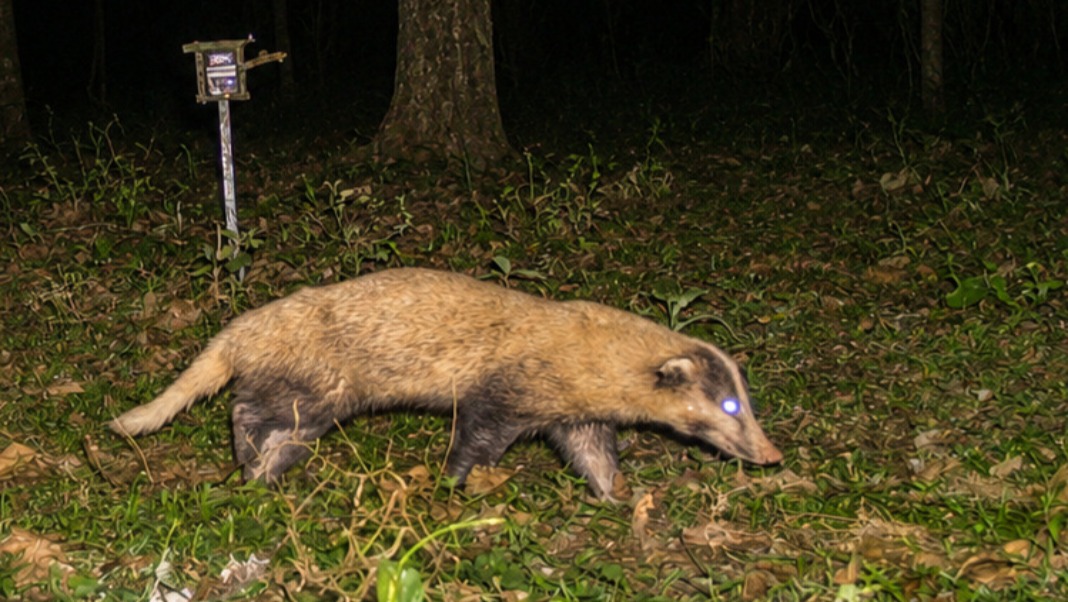

Guwahati, June 13: Data collected for India’s tiger census has revealed an unexpected conservation success in Assam, with researchers estimating a healthy population of the elusive Greater Hog Badger in Kaziranga National Park and Tiger Reserve.
The first scientific assessment of the species in Kaziranga has estimated that at least 55 Greater Hog Badgers inhabit the reserve’s sprawling floodplain landscape, making the park one of the most significant known refuges for the globally vulnerable mammal in South Asia.

The findings emerged from an analysis of thousands of camera-trap images captured during the All India Tiger Estimation exercise. Researchers from Kaziranga’s Tiger Cell, working with the Wildlife Conservation Trust and The Fishing Cat Project, turned what is normally considered “bycatch” data into a dedicated study of one of the region’s least-known carnivores.
Often overshadowed by Kaziranga’s iconic rhinos, elephants and tigers, the Greater Hog Badger—locally known as Mati Gahori—is the world’s largest badger species. Nocturnal and highly elusive, it spends much of its time foraging and digging through forest floors and grasslands, making it difficult to monitor in the wild.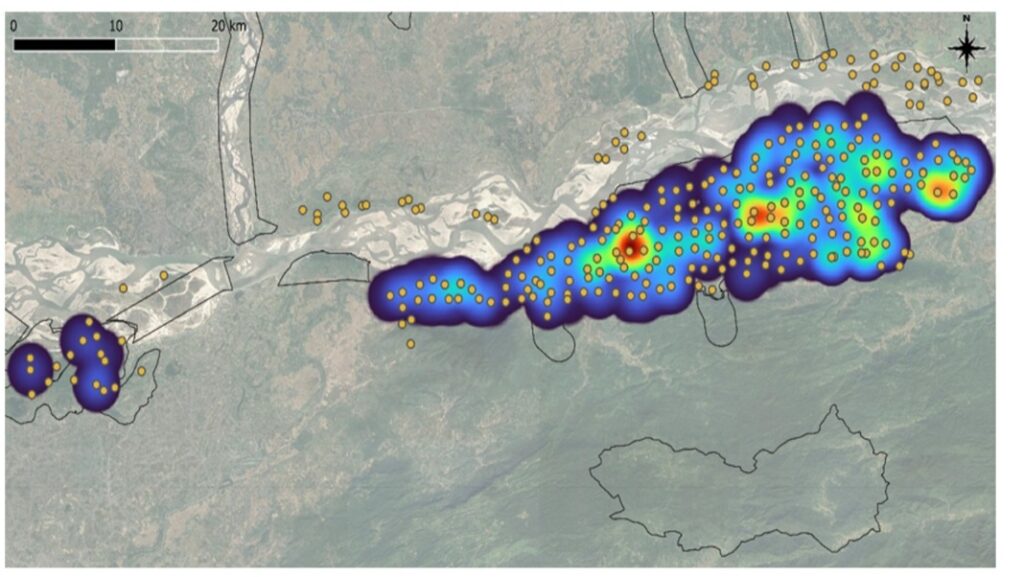
Researchers documented more than 140 detections of the species across 857 camera-trap locations, confirming that it is widely distributed throughout Kaziranga’s mosaic of grasslands, wetlands and woodland habitats. Hotspots were identified along the Diffolu River near Kerasin and Daphlang, as well as near Sohola along the park’s eastern boundary.
The discovery carries significance beyond Kaziranga. According to conservationists, Greater Hog Badger populations have declined sharply across much of Southeast Asia due to hunting and habitat loss. India and Thailand are now believed to hold some of the species’ strongest remaining populations, elevating the conservation importance of Assam and the wider Northeast.
The species is listed as Vulnerable on the IUCN Red List and receives the highest level of legal protection in India under Schedule I of the Wildlife (Protection) Act.
Forest Minister Jayanta Malla Baruah described the findings as encouraging, saying the widespread presence of the elusive mammal reflects the health of Kaziranga’s ecosystems and highlights the importance of conserving all species, not just the park’s flagship wildlife.
Also Read: Assam Rifles organises eye care camp in Arunachal’s Changlang, 250 patients screened
Also Watch
Find latest news from every corner of Northeast India at hubnetwork.in, your online source for breaking news, video coverage.
Also, Follow us on
Twitter-twitter.com/nemediahub
Youtube channel- www.youtube.com/@NortheastMediaHub2020
Instagram- www.instagram.com/ne_media_hub
Download our app from playstore – Northeast Media Hub