

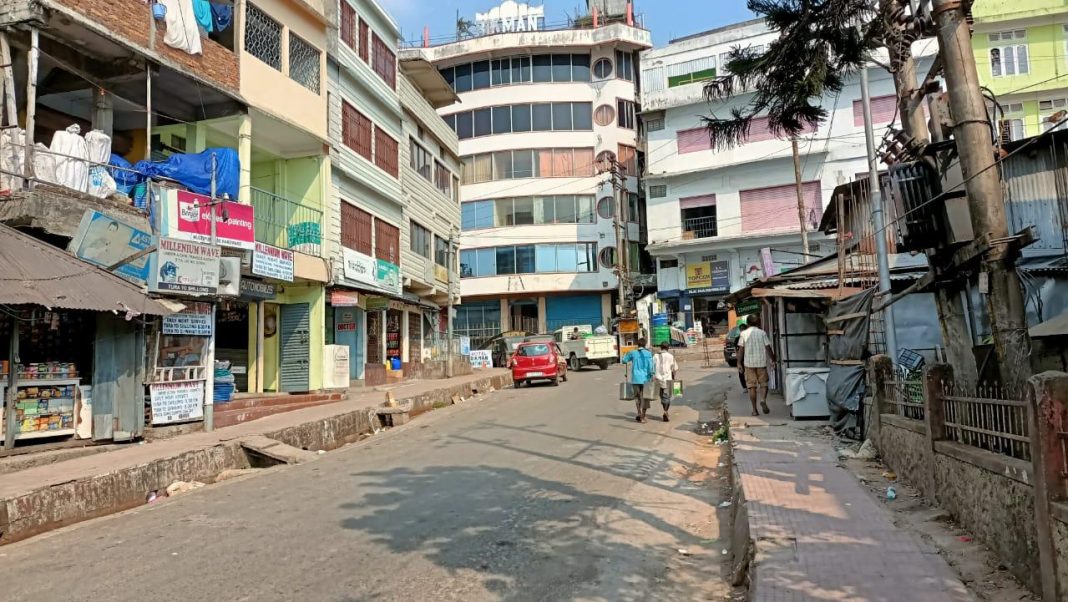

A routine annual licence renewal process in Meghalaya’s Garo Hills has unexpectedly turned into a larger conversation around district council rules, unofficial approvals and how trade regulation functions inside Sixth Schedule areas. The controversy began after traders in Tura alleged that additional informal conditions were being linked to TNT licence renewals, prompting the Garo Hills Autonomous District Council to later issue a clarification stating that no MDC recommendation or extra NOC is required under the existing process.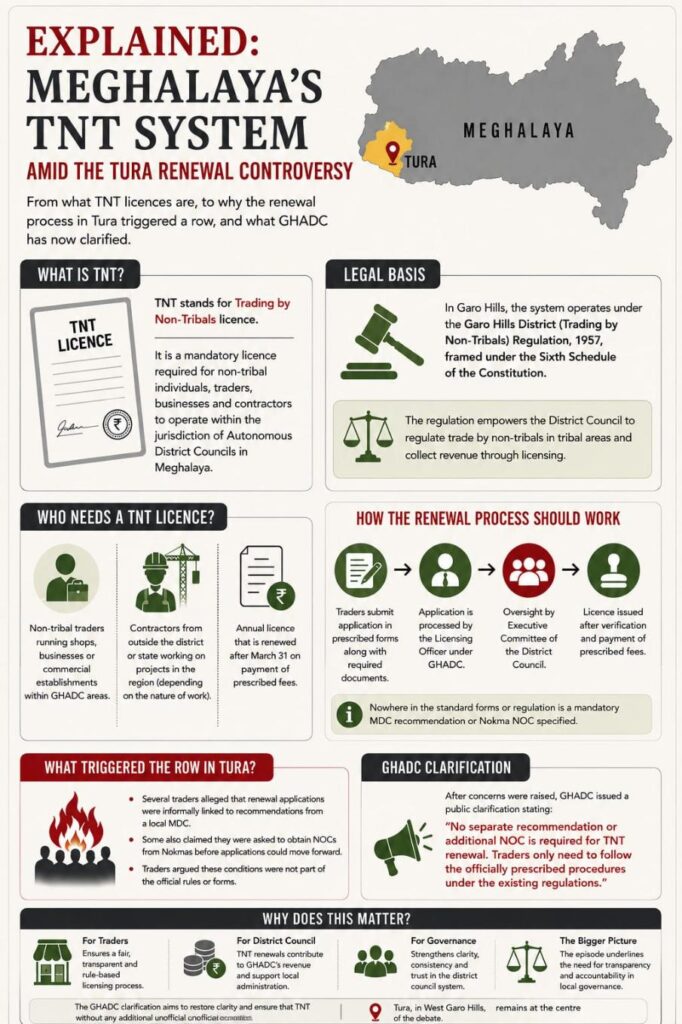
Tura, May 9 : TNT, or Trading by Non-Tribals licence, is a mandatory document required for non-tribal traders and businesses operating within the jurisdiction of autonomous district councils in Meghalaya. In Garo Hills, the system functions under the Garo Hills District (Trading by Non-Tribals) Regulation, 1957, framed under the Sixth Schedule structure governing autonomous councils.
The regulation was originally designed to regulate commercial activity by non-tribal individuals within tribal areas while allowing district councils to oversee and collect revenue from such trade activities.
Under the system, non-tribal traders running shops, commercial establishments or businesses within GHADC areas are required to obtain licences from the district council after paying prescribed fees. Contractors from outside the district or state executing projects in the region may also require similar permissions depending on the nature of work.
The licences are renewed annually, usually after March 31, and form part of the district council’s regular revenue structure.
This year, however, the renewal process in Tura became controversial after several traders alleged that applications were informally being linked to recommendations from a local MDC. Some traders also claimed they were being asked to obtain NOCs from Nokmas before their renewal applications could move forward.
The issue drew attention because the standard renewal forms and regulation documents accessed by this publication prominently mention licensing officers, executive committee oversight and prescribed fees, but do not visibly specify any compulsory MDC recommendation requirement as part of the standard process.
Following the controversy, GHADC issued a public clarification stating that no separate recommendation or NOC is required for TNT renewal and that traders only need to follow the officially prescribed procedures under the existing regulations.
The clarification came after concerns spread among sections of the trading community in Tura, where TNT renewal is closely tied to continuation of business operations. Traders operating commercial establishments already maintain multiple compliances including municipal permissions, shop registrations and other local clearances.
The matter also carries wider administrative significance because TNT renewals contribute directly to district council revenue collection. Delays or confusion during the renewal season affect both traders and the council’s revenue flow.
The controversy has now opened up a broader conversation around how district council regulations are interpreted and implemented on the ground, particularly in areas where customary institutions, local political structures and administrative systems often intersect closely in everyday governance.
Also Watch
Find latest news from every corner of Northeast India at hubnetwork.in, your online source for breaking news, video coverage.
Also, Follow us on
Twitter-twitter.com/nemediahub
Youtube channel- www.youtube.com/@NortheastMediaHub2020
Instagram- www.instagram.com/ne_media_hub
Download our app from playstore – Northeast Media Hub