


Urmi Bhattacharjee
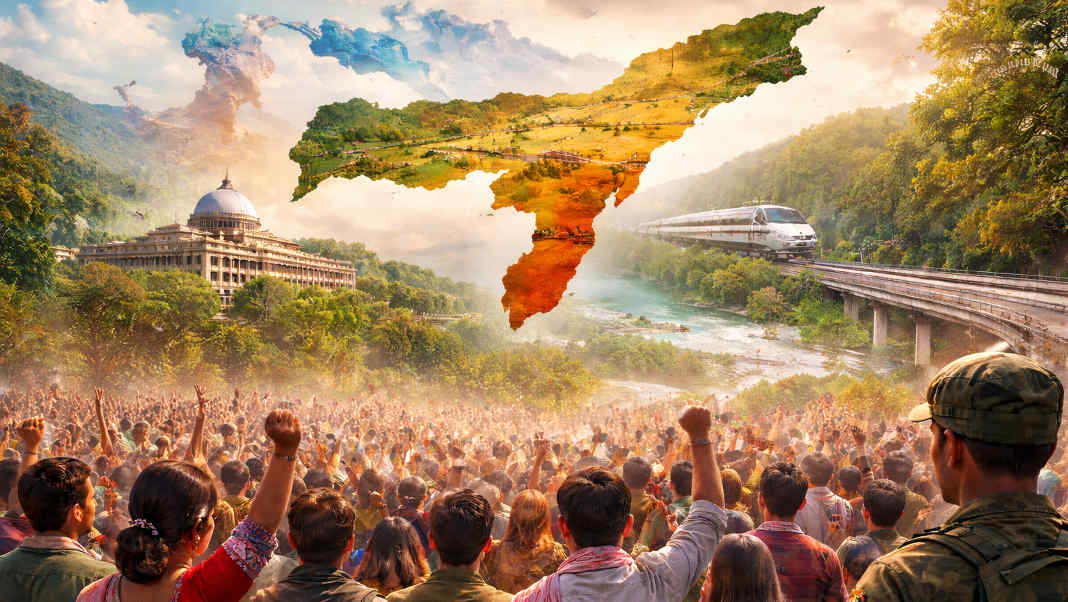
Assam is heading into an election that feels bigger than numbers or seats—almost like a checkpoint moment for the Northeast. What is unfolding is not just a political contest, but a layered shift where identity, governance, and regional aspirations are intersecting in new ways.
Guwahati, April 8: With campaigning now over, signals from the ground point to something deeper than a routine electoral battle—a broader political churn that could redefine Assam’s trajectory.
Where regional currents meet national stakes
The 2026 Assembly polls will decide who governs Assam, but they will also indicate where the wider Northeast is headed politically.
At one level, the contest is straightforward. The ruling side led by Himanta Biswa Sarma is seeking to retain its dominance, while the Indian National Congress is attempting to rebuild its presence in a state it once controlled.
But the ground reality suggests something more layered.
Take the Boko–Chaygaon constituency—a borderland where Assam meets Meghalaya. It is not just another electoral seat, but a zone where identities, economies, and politics intersect. The recent campaign by Conrad K. Sangma here, drawing significant crowds, signals a broader shift—regional parties are no longer confined within their states and are actively shaping political conversations beyond them.
This is where the Assam election begins to stretch beyond state politics.
Identity, memory, and unresolved questions
Issues of identity remain central—from indigenous rights to autonomy demands in regions like Karbi Anglong. At the same time, the after-effects of the National Register of Citizens (NRC) and citizenship debates continue to shape voter sentiment, particularly in districts where questions of belonging remain
sensitive.
These are not abstract issues—they are lived realities that continue to influence how communities vote.
Governance versus lived experience
Running parallel to identity politics is the governance narrative.
Infrastructure, connectivity, and development have been strongly emphasised by the ruling dispensation. But voters are also weighing everyday concerns—employment, rural distress, and conditions in tea garden communities.
This gap between macro claims and micro realities could prove decisive.
A state that does not vote as one
What makes Assam particularly complex is its internal diversity.
Regions such as the Barak Valley, Bodoland, and the hill districts do not vote uniformly. Border constituencies like Boko–Chaygaon add another layer, where cross-border cultural and political influences become visible.
This fragmented political geography makes statewide predictions inherently uncertain—and politically significant.
The rise of regional assertion
The election also reflects a growing intersection between national and regional politics.
A strong performance by the Bharatiya Janata Party would consolidate its Northeast footprint. At the same time, the expanding presence of parties like the National People’s Party points to a parallel narrative—one where regional identity and inter-state political linkages are gaining ground.
Why Assam matters beyond Assam
Beyond immediate results, Assam carries strategic weight.
As the gateway to the Northeast and a critical link in India’s Act East ambitions, political control here shapes not just governance, but connectivity, trade, and regional alignment.
Put together, Assam 2026 is not just about forming a government. It is about how the state negotiates identity, development, and regional assertion—at a moment when both national forces and emerging regional actors are trying to define its future.
Also Read: Assam Polls 2026: Dibrugarh sets record with 300 all-women polling stations
Also Watch
Find latest news from every corner of Northeast India at hubnetwork.in, your online source for breaking news, video coverage.
Also, Follow us on
Twitter-twitter.com/nemediahub
Youtube channel- www.youtube.com/@NortheastMediaHub2020
Instagram- www.instagram.com/ne_media_hub
Download our app from playstore – Northeast Media Hub