

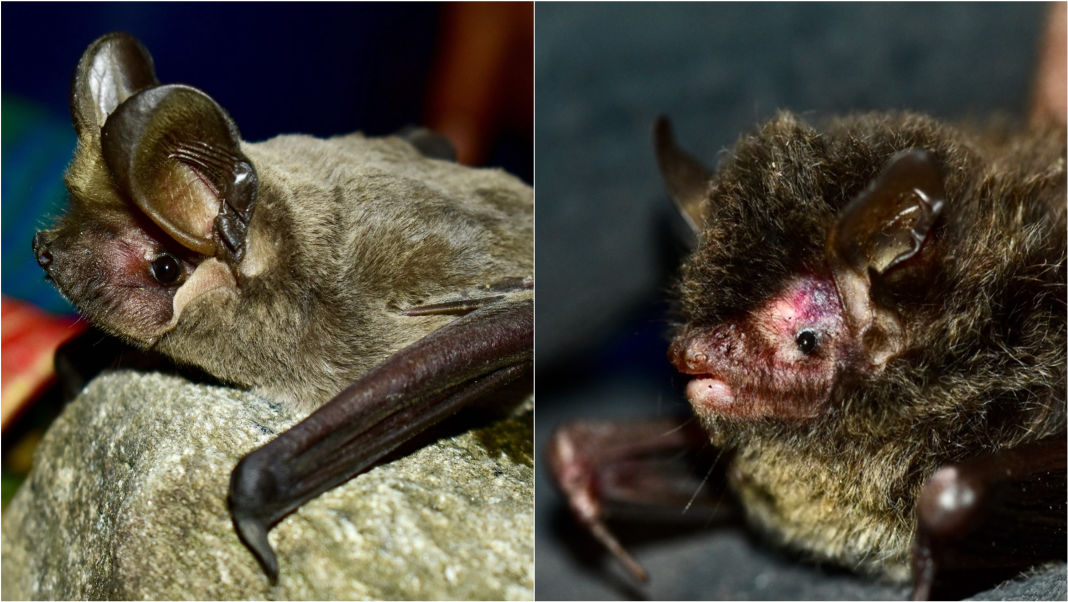

Shillong, June 6: In a major breakthrough for biodiversity science, researchers have discovered a new species of bat from the Himalayan region of India and Pakistan, with two scientists from Meghalaya playing a crucial role in the study.
The newly described bat, named Himalayan long-tailed Myotis (Myotis himalaicus), was identified through an extensive reassessment of the Himalayan bat fauna—an understudied but ecologically rich region. The findings, published in the latest edition of the international journal Zootaxa, are being hailed as a milestone in mammalian taxonomy and conservation.
Among the team of six international researchers, Uttam Saikia of the Zoological Survey of India, Shillong, and M.A. Laskar of St. Anthony’s College, Shillong, represented Northeast and made vital contributions to the study. They collaborated with Rohit Chakravarty from the Nature Conservation Foundation, Mysuru; Gabor Csorba of the Hungarian Natural History Museum; and Manuel Ruedi of the Natural History Museum of Geneva.
The new species was described from specimens collected in high-altitude forests of Uttarakhand and Pakistan’s Khyber Pakhtunkhwa province. It belongs to the Myotis frater complex, a group of morphologically similar bats distributed across East and Central Asia. The Himalayan long-tailed Myotis, which inhabits Deodar, Pine, and Cedar forests, appears to be a rare species native to the southern slopes of the Himalayas.
The study also led to a number of other important findings:
- Tadarida insignis, the East Asian free-tailed bat, has been confirmed as part of India’s bat fauna for the first time, having been previously misidentified.
- The long-debated Babu’s Pipistrelle (Pipistrellus babu) has now been conclusively validated as a distinct species, separate from the Southeast Asian Pipistrellus javanicus.
- First specimen-based confirmations have been provided for the presence of Savi’s Pipistrelle (Hypsugo savii) and the Japanese greater horseshoe bat (Rhinolophus nippon) in India.
Dr. Dhriti Banerjee, Director of the Zoological Survey of India, said the study significantly advances efforts to document and conserve India’s small mammalian fauna. “The confirmed tally of Indian bat species now stands at 135, and we expect more additions as Himalayan biodiversity continues to be explored,” she added.
This landmark discovery underscores the importance of cross-border collaboration and the growing role of researchers from India’s Northeast, particularly Meghalaya, in global biodiversity science.
Also Read: Indore tourist murder case: Search for Raja’s wife continues, no trace yet
Also Watch
Find latest news from every corner of Northeast India at hubnetwork.in, your online source for breaking news, video coverage.
Also, Follow us on-
Twitter-twitter.com/nemediahub
Youtube channel- www.youtube.com/@NortheastMediaHub2020
Instagram- www.instagram.com/ne_media_hub
Download our app from playstore – Northeast Media Hub