

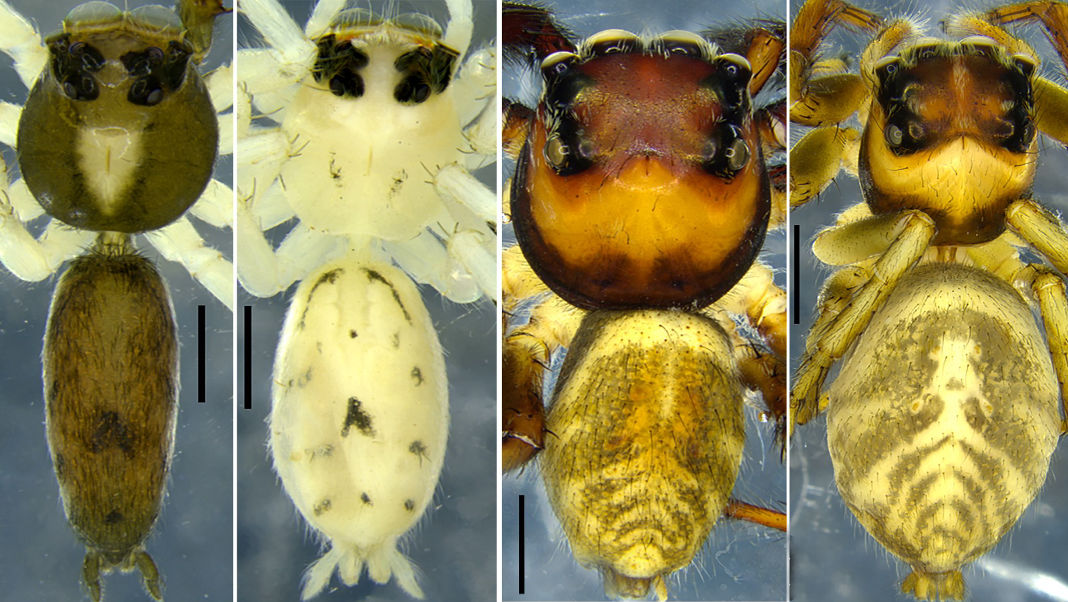

Guwahati, Dec 9: In a major boost to India’s biodiversity research, scientists from the Zoological Survey of India (ZSI) have discovered two new species of jumping spiders in Meghalaya—Asemonea dentis and Colyttus nongwar. The breakthrough underscores the Northeast’s standing as a vital component of the Indo-Burma mega biodiversity hotspot and highlights how much of the region’s wildlife remains scientifically undocumented.
The discoveries, published in the latest issue of Zootaxa, add to the country’s growing list of Salticidae—commonly known as jumping spiders—celebrated for their acute vision, agility, and distinctive ambush-hunting behaviour.
Distinctive Features of the New Species
Asemonea dentis
Only the third Indian species identified under the Asemonea genus.
Named for a tooth-like projection on the male’s palpal femur, a key taxonomic trait.
Males bear a greenish-brown body with a pale yellow V-shaped marking on the abdomen; females are creamy white with black patterning.
Colyttus nongwar
Only the second Colyttus species recorded in India.
Named after Nongwar village in Meghalaya, the site of its discovery.
Both sexes possess an oval reddish-brown carapace and a light-brown abdomen marked with a creamy band and five white chevron patches.

A Call for Deeper Exploration
Lead researcher Dr. Souvik Sen, accompanied by co-author Dr. Sudhin P. P., said the find reflects the enormous but underexplored diversity of the region. “These discoveries are just a glimpse of the exceptional biodiversity of Northeast India,” Dr. Sen noted. “Very few systematic surveys have been conducted here, and many more species are undoubtedly waiting to be found.”
ZSI Director Dr. Dhriti Banerjee stressed that the discoveries strengthen the case for sustained research in the Northeast. “Findings like these underscore the need for wider surveys to document India’s rich natural heritage. Meghalaya’s forests, sacred groves, and cliffs are irreplaceable ecological assets,” she said.
The ZSI has urged more collaborative research and conservation initiatives to safeguard Meghalaya’s fragile ecosystems—reinforcing the “abode of clouds” as one of India’s most biologically vibrant landscapes.
Roopak Goswami
Also Read: A•we Festival 2025 kicks off in North Garo Hills with vibrant cultural showcase, tourism push
Also Watch
Find latest news from every corner of Northeast India at hubnetwork.in, your online source for breaking news, video coverage.
Also, Follow us on
Twitter-twitter.com/nemediahub
Youtube channel- www.youtube.com/@NortheastMediaHub2020
Instagram- www.instagram.com/ne_media_hub
Download our app from playstore – Northeast Media Hub

 have discovered two new species of jumping spiders in Meghalaya—Asemonea dentis and Colyttus nongwar.)