


Guwahati, Sept 14: Two remarkable natural sites from Northeast India — the Meghalayan Age Caves in Meghalaya and the Naga Hill Ophiolite in Nagaland — have been added to India’s Tentative List of UNESCO World Heritage Sites. The submissions highlight the region’s extraordinary geological and ecological heritage.
Both nominations were formally submitted by the Permanent Delegation of India to UNESCO, marking a significant step towards potential inclusion in the prestigious World Heritage List.
The sites represent distinct aspects of the region’s heritage—the Ophiolite belt as a rare geological formation that reveals Earth’s tectonic history, and the caves as archives of the Meghalayan Age, a geological epoch that began 4,200 years ago.
With these new inclusions, the Northeast now has a total of eight properties on India’s Tentative List, reflecting the region’s rich cultural and ecological diversity.
The Tentative List of UNESCO refers to an official inventory of cultural and natural heritage sites that a country considers suitable for nomination to the UNESCO World Heritage List in the future.
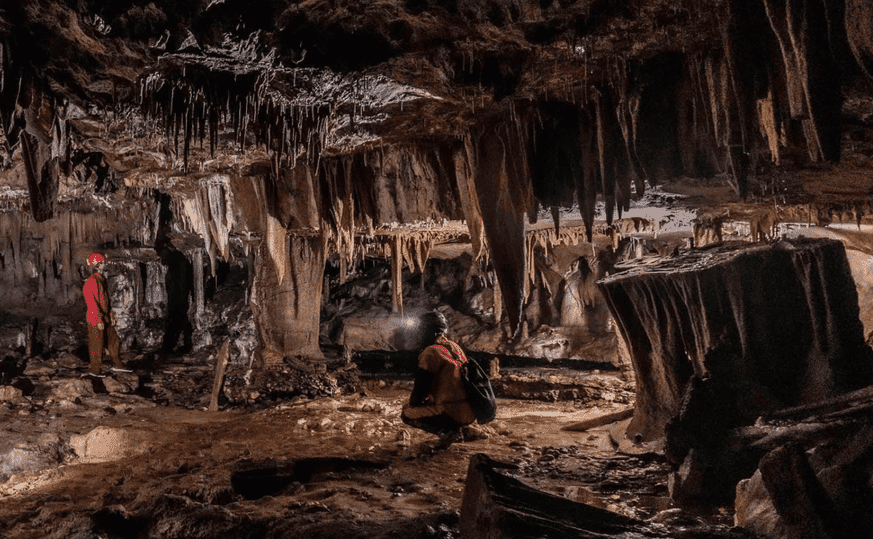
Meghalayan Age Caves: The submission highlights four caves in East Khasi Hills—Mawmluh, Arwah, Mawsmai, and Krem Puri—selected for their size, geological features, and accessibility. While Meghalaya is home to more than 1,600 caves, these four stand out for their outstanding universal value under natural criteria (vii), (viii), and (ix).
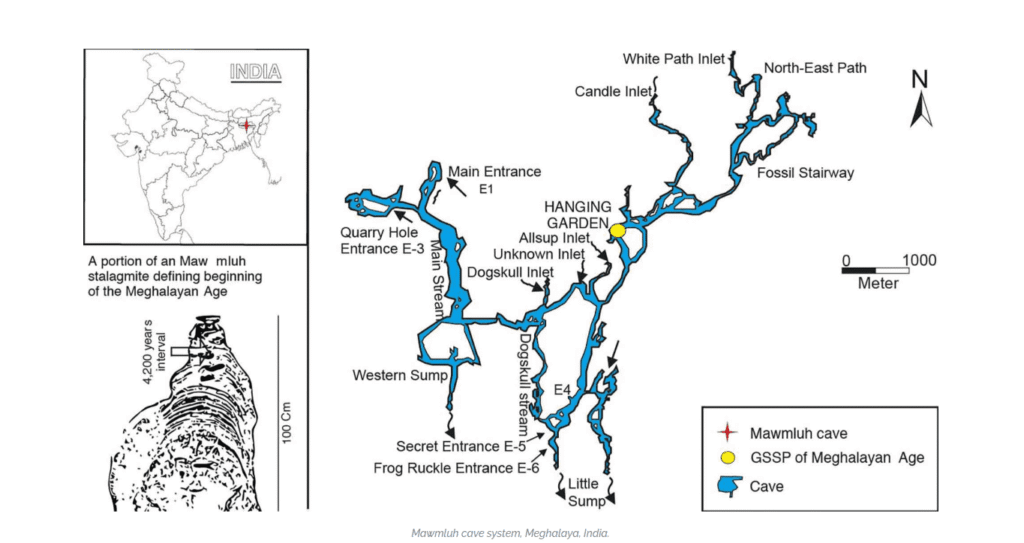
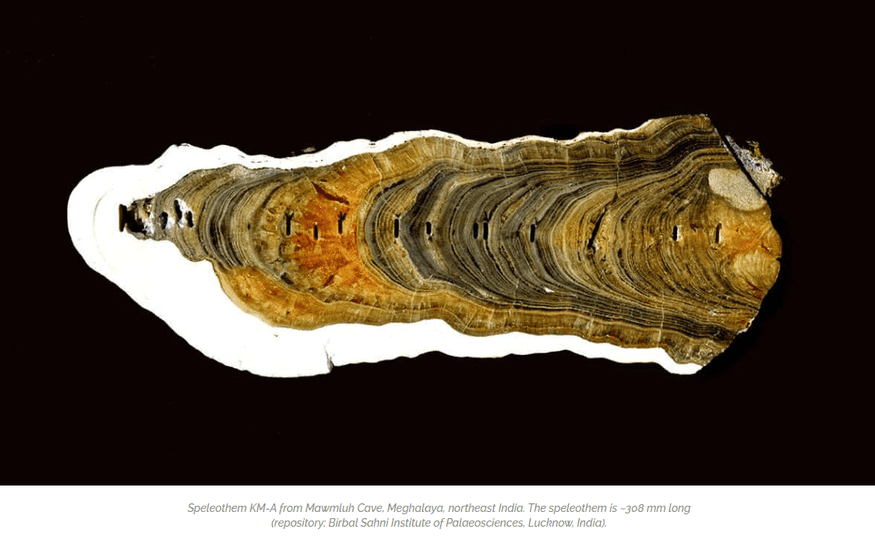
Mawmluh Cave holds exceptional importance as the Global Boundary Stratotype Section and Point (GSSP) for the Meghalayan Age, the youngest stage of the Holocene epoch. It was here that scientists identified evidence of a mega-drought 4,200 years ago—the “4.2 ka event”—that led to the collapse of several ancient civilisations. The cave’s stalagmites preserve a high-resolution record of monsoon variability, making it a reference point in global geological studies.
Krem Puri, the world’s longest sandstone cave at 24.5 km, adds to the region’s scientific and natural significance. The caves also shelter rare aquatic species and unique arthropod communities, underlining their ecological value.
The tentative listing places Meghalaya’s caves in the same league as Slovenia’s Škocjan Caves, Vietnam’s Phong Nha-Ke Bang, and the Carlsbad Caverns of the USA. However, experts note that Mawmluh offers a distinct value, not for its grandeur, but for its pivotal role in defining the Meghalayan Stage of Earth’s history.
With this inclusion, the Meghalayan Age Caves may eventually qualify under UNESCO’s “Cave and Karst Systems” theme, strengthening India’s case for global recognition of its extraordinary geoheritage.
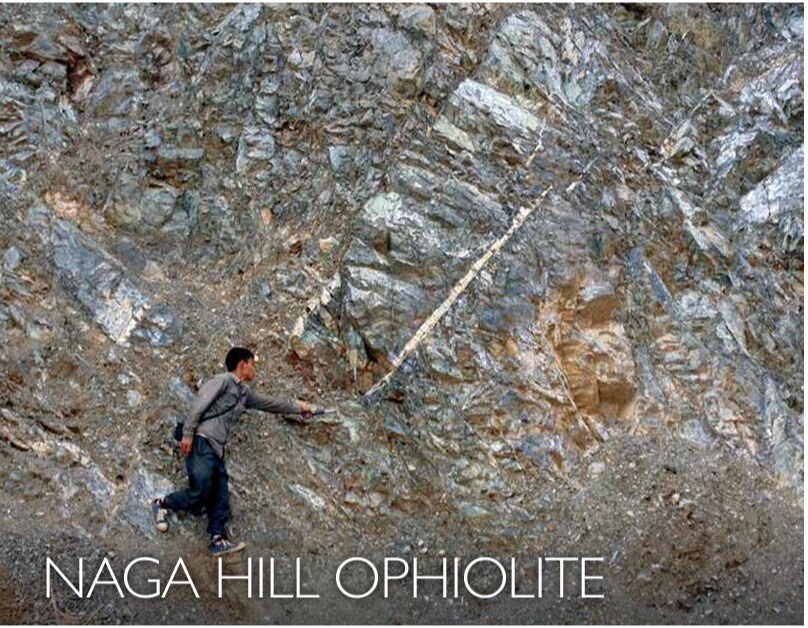
Naga Hill Ophiolite: Located in the Kiphire district, the Naga Hill Ophiolite represents a rare slice of Earth’s oceanic crust that was thrust onto land millions of years ago during the collision of tectonic plates. This makes it an exceptional natural laboratory for understanding plate tectonics, oceanic lithosphere, and continental collision processes. Declared a National Geological Monument by the Geological Survey of India, the site offers one of the most complete ophiolite sequences found anywhere in the world.
Beyond its geological significance, the Naga Hill Ophiolite overlaps with four Key Biodiversity Areas and Important Bird Areas, including the Satoi Range, Mount Ziphu, Fakim Wildlife Sanctuary–Saramati area, and Pfutsero-Chizami. The region is home to vulnerable and endemic species such as the Rufous-necked Hornbill and Blyth’s Tragopan, alongside rare reptiles like the Asian Brown Tortoise and Mouhot’s Box Turtle. Several plant species are exclusively confined to Nagaland, further strengthening its case for global recognition.
Situated within one of the world’s 18 mega biodiversity hotspots, the site also carries deep cultural resonance. Naga oral traditions, folklore, and community-led conservation practices remain tied to these landscapes, making it a geo-bio-cultural ensemble of extraordinary value.
If inscribed, the Naga Hill Ophiolite would join global geological landmarks such as Australia’s Macquarie Island and New Zealand’s Tongariro National Park, but with a unique distinction: as a continental ophiolite belt, it provides a rare window into Earth’s tectonic history while nurturing biodiversity and indigenous heritage.
Two sites from Meghalaya-Garo Hills Conservation Area (GHCA) and Jingkieng jri: Living Root Bridge Cultural Landscapes are already in the tentative list of UNESCO
Also Read: National People’s Party condoles the demise of Dr. D.D. Lapang
Also Watch
Find latest news from every corner of Northeast India at hubnetwork.in, your online source for breaking news, video coverage.
Also, Follow us on-
Twitter-twitter.com/nemediahub
Youtube channel- www.youtube.com/@NortheastMediaHub2020
Instagram- www.instagram.com/ne_media_hub
Download our app from playstore – Northeast Media Hub